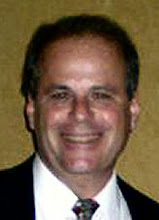
The Museum of Family History invites you to the "opening" of its latest exhibition entitled "Jews in Small Towns: Legends and Legacies." It is based on a 1997 book (of the same name) written by Howard V. Epstein, Ph.D. It is an interesting read as we get an intimate look into the lives of Jews who spent part or all of their lives within the small towns (less than 25,000 people) of the United States and Canada.
Epstein writes, "Each individual story reflects the life and times of the author as he or she experienced living as a small-town Jew. For some, this existence could be characterized as 'the best of times,' and for others it was 'the worst of times'.... Perhaps this will have some meaning for succeeding generations. I hope that as these stories are read, they will impart the flavor of a very special segment of the Jewish community of North America."
The book "Jews in Small Towns..." contains one hundred and forty personal experiences; this online exhibition presents to you twenty-nine of them, one from each of the states and provinces represented in this book.
.................................................................................................
"Our family emphasized education--especially for my father, who felt being an American was so very important. He taught himself to spell and often would add an extra letter to a word. When I asked why he did that, he replied that in America it's extra good, so I add an extra letter. I never understood how meaningful that phrase was until I read his acount of his miserable, impoverished, and scary childhood in the European Yeshivoth. He felt he had accomplished a great deal because his three children received university educations and higher degrees..."
--Ida R. Shreiber, Shawnee, Oklahoma
.................................................................................................
In his book's prologue, Epstein writes, "A knowledgeable rabbi once related that the story of the four sons in the Passover Haggadah referred actually to four generations, beginning with the European Jews who were deeply immersed in the traditions of Jewish life. With each succeeding generation there were fewer questions to ask, because there was greater distance between the tradition of family roots and the socialization into American society, which all too often resulted in cultural distancing and, ultimately, assimilation. Thus the fourth son had no questions to ask because he had no Jewish background on which to base any questions about the significance of the Pesach seder."
.................................................................................................
"The event in the Jewish calendar that gives me the fondest memories of Cumberland (Maryland) is Passover. B'Er Chayim strongly believed in organizing the whole congregation into a community seder, always in the vestry room. The sisterhood cooked and served the supper. (My mother, who was always on this committee, saw to it that her brood was served first.) The rabbi and many of the pillars of the congregation read from the Haggadah. Everyone sang the traditional songs, which we kids had practiced for weeks ahead of time in the religious school, while the rebbitzin Hadassah Lefkowitz played the piano. The top Hebrew pupils got their chance to shine in reciting the Four Questions. "Who knows one?" was always comical with the rabbi choosing some of the "characters" in the congregation to answer."
--Perry Peskin, Cumberland, Maryland
....................................................................................................
I hope you find reading these personal stories as interesting as I have. "Jews in Small Towns: Legends and Legacies" can be found at www.museumoffamilyhistory.com/lia-jist.htm .
The Museum of Family History welcomes more such stories, not just about life in small towns, but also about life as a Jew in bigger towns or cities; not only from the United States or Canada, but from throughout the world. If you have a story, either in form of a written text , or as an audio or video file, and you wish to share it with others who might visit the Museum, please contact me at steve@museumoffamilyhistory.com.
Showing posts with label united states. Show all posts
Showing posts with label united states. Show all posts
Wednesday, August 19, 2009

Friday, August 7, 2009
New exhibition: "Guide to United States for the Immigrant Jew"
The Museum of Family History (MFH) would like to announce an online exhibition based on a small book put out by the Immigration Publication Society and translated from a Yiddish edition. It was first published in 1912 and then again in 1916.
Many of us have family members who immigrated to the United States around this time, so the Museum decided that it would be useful and educational to present a publication that might have been given away to immigrants when they first arrived in the United States. According to a NY Times Book Review from 1920 this book “is intended to benefit, dealing with the advantages derived from citizenship and the duties devolving upon those on whom it conferred. In this guide a résumé is given of the early history of the United States and the manner in which Independence was obtained. Immigrants are told of the freedom they enjoy in America, where all that is asked of them is obedience to humane laws. There are also many hints on naturalization and the means of obtaining it and a condensed compendium of laws affecting conduct in public, marriage, divorce, desertion, lotteries, &c.”
The URL for this exhibition is www.museumoffamilyhistory.com/gus.htm .
Many of us have family members who immigrated to the United States around this time, so the Museum decided that it would be useful and educational to present a publication that might have been given away to immigrants when they first arrived in the United States. According to a NY Times Book Review from 1920 this book “is intended to benefit, dealing with the advantages derived from citizenship and the duties devolving upon those on whom it conferred. In this guide a résumé is given of the early history of the United States and the manner in which Independence was obtained. Immigrants are told of the freedom they enjoy in America, where all that is asked of them is obedience to humane laws. There are also many hints on naturalization and the means of obtaining it and a condensed compendium of laws affecting conduct in public, marriage, divorce, desertion, lotteries, &c.”
The URL for this exhibition is www.museumoffamilyhistory.com/gus.htm .
Subscribe to:
Posts (Atom)

 Posts
Posts