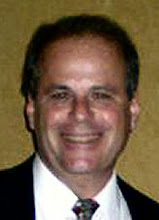
Mayer Kirshenblatt left his hometown of Opatów, Poland in 1934 at the age of seventeen for a new life in Canada. With him he not only brought some of his physical possessions, but also a storehouse of memories that he would carry with him bittersweetly for many decades to come. Thanks to his daughter Barbara Kirshenblatt-Gimblett and his wife, both of whom urged him to put to canvas what he remembered, Mayer took up painting in 1990, and to date has created more than three hundred paintings, each one a memory of life in a town that once contained thousands of Jews and that he called "home."
In two "sister" exhibitions we will hear from Mayer and see dozens of his paintings (acrylics on canvas) that deal with his family life, as well as the Jewish communal life that existed in his hometown (in Yiddish called "Apt") in the 1920s and 30s. He will also talk about Shabbat, as well as a number of other Jewish holidays. By seeing his works and by hearing him tell his story in his own words via nearly twenty audio clips, a wonderful picture is painted for us of what life was like in Opatów for the Jews who once lived there.
Mayer says that "every Jewish town is the same," so perhaps we wouldn't be taking liberties to imagine that our families, our ancestors who also lived in Europe at one time, in a town also populated with thousands of Jews, might have very well lived in a town just like this one.
If a visitor to these exhibitions once lived in pre-war Europe, perhaps Mayer's paintings and accounts of life there might evoke similar or other long forgotten memories. That would be something!
Perhaps Mayer's works will compel us to think about our own Jewish upbringing and the neighborhoods we once lived in. How was his life in Poland similar to our own, and how was it different? How was living in a Jewish community such as Apt similar to living in a Jewish neighborhood, among the tenements or brownstones of Brooklyn or perhaps on the Lower East Side of the 1930s, 40s or 50s?
Maybe after viewing these exhibitions you will consider drawing or painting the memories of your own childhood, writing them down for posterity, or at the very least telling these precious stories to your children or grandchildren.
You can visit the first exhibition, "Paint What You Remember: The Memories of Mayer Kirshenblatt" at www.museumoffamilyhistory.com/ce/kirshenblatt/kirshenblatt.htm. Included within this exhibition are many sound clips and three video clips from YouTube.
You can visit the second exhibition which is now part of the larger "Shabbat and the Jewish Holidays" exhibition at the Museum, containing photographs of Mayer's paintings and the artist's comments at www.museumoffamilyhistory.com/ce/kirshenblatt/jholidays-kirshenblatt.htm.
Your comments are always welcome, though please send them via the Comments feature of the blog.
Showing posts with label Jewish family. Show all posts
Showing posts with label Jewish family. Show all posts
Monday, October 26, 2009

Thursday, October 22, 2009
Yiddish Theatres: Classic and Romantic Drama in East Side Jargon, 1900
For those of you who have at least a passing interest in the history of the Yiddish theatre, this next article may delight you--and at least educate you a bit.
For those of you who aren't interested, it still will be worthwhile to read this article because it paints a picture of what our parents or grandparents might have experienced, attending the performance of a Yiddish play after a long day's work.
Remember that in many of the towns in which our family members lived in Europe before World War II (and even World War I), Yiddish plays were frequently performed. Perhaps these Yiddish plays performed, in their native tongue where they now lived, served to remind them of their former home--their lives, their community--albeit bittersweetly.
In this New-York Daily Tribune article of January 1900, you can learn a bit about how a Yiddish theatre was generally run, as well as its appeal, especially to blue-collar Jewish families.
The article begins by talking about the unionization of Yiddish actors and then talks about the goings-on in the Yiddish theatre and those who attend the performances. Remember now that in 1900, Yiddish theatre was very popular (at least among Jews), with bona fide stars such as Boris Thomashefsky and Bertha Kalish.
The article says in part:
"To gain a correct idea of the Yiddish theatre one must see it, and that it may be thoroughly appreciated [by] other senses than that of sight must be drawn upon. The crowds in the lobby resemble those which are seen in the clothing district when a strike is on, and the air is thick with cigarette smoke. Inside, men and women are talking and visiting and paying little attention to the orchestra. Boys with trays of candy, cakes, fruit and "soft drinks" do a paying business, and sell their wares in the body of the house. The opening lines of the actors are usually lost, except to those people who sit far in front, and demands for silence come from all parts of the auditorium. Sometimes these are in the form of the hissing "Pst! pst! which one hears in all European theatres, and sometimes the more imperative "Ruhig," "'Smaul halten!" or "Still!" are heard. Then comes the play, and close attention on the part of the audience, frequent applause and boisterous laughter and sniffles are sure to reward the efforts of the actors."
The article can be found by clicking at www.museumoffamilyhistory.com/yt-bs-nydt-01.htm.
For those of you who aren't interested, it still will be worthwhile to read this article because it paints a picture of what our parents or grandparents might have experienced, attending the performance of a Yiddish play after a long day's work.
Remember that in many of the towns in which our family members lived in Europe before World War II (and even World War I), Yiddish plays were frequently performed. Perhaps these Yiddish plays performed, in their native tongue where they now lived, served to remind them of their former home--their lives, their community--albeit bittersweetly.
In this New-York Daily Tribune article of January 1900, you can learn a bit about how a Yiddish theatre was generally run, as well as its appeal, especially to blue-collar Jewish families.
The article begins by talking about the unionization of Yiddish actors and then talks about the goings-on in the Yiddish theatre and those who attend the performances. Remember now that in 1900, Yiddish theatre was very popular (at least among Jews), with bona fide stars such as Boris Thomashefsky and Bertha Kalish.
The article says in part:
"To gain a correct idea of the Yiddish theatre one must see it, and that it may be thoroughly appreciated [by] other senses than that of sight must be drawn upon. The crowds in the lobby resemble those which are seen in the clothing district when a strike is on, and the air is thick with cigarette smoke. Inside, men and women are talking and visiting and paying little attention to the orchestra. Boys with trays of candy, cakes, fruit and "soft drinks" do a paying business, and sell their wares in the body of the house. The opening lines of the actors are usually lost, except to those people who sit far in front, and demands for silence come from all parts of the auditorium. Sometimes these are in the form of the hissing "Pst! pst! which one hears in all European theatres, and sometimes the more imperative "Ruhig," "'Smaul halten!" or "Still!" are heard. Then comes the play, and close attention on the part of the audience, frequent applause and boisterous laughter and sniffles are sure to reward the efforts of the actors."
The article can be found by clicking at www.museumoffamilyhistory.com/yt-bs-nydt-01.htm.
Subscribe to:
Posts (Atom)

 Posts
Posts