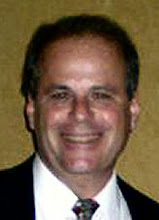
I will share with you one of my own interesting family stories, which will illustrate to you how the path to discovering the history of one's family name can be convoluted and the process daunting.
My beloved maternal grandfather was born Avraham Chone Gniazdowicz. He was born in or about Sniadowo, Poland (there was an adjacent shtetl named Gniazdowo, which presumably is how his family came by their surname). He immigrated to the U. S. with a cousin in 1906, though not as a Gniazdowicz, but as an Oschensky. This was the family name of his cousin Shloime (Sam), with whom he immigrated with (note that his cousin at some time after arriving in the U.S. changed his surname too -- from Oschensky to Ocean).
Presumably grandfather (as a fifteen-year-old) changed his surname while still living in Poland in order to avoid the draft, though perhaps there were other reasons, e.g. the lack of a birth certificate. Perhaps he took the surname of his cousin's family and used the birth certificate of a male in the Oschensky family who had previously died, or because they had no need of it, for whatever reason. One can only guess....
I imagine the reasons for why someone changed their name (or had their name changed) often were not discussed openly within one's family, for whatever reason. Perhaps some were afraid that if the reason for the name change was discussed, it might tarnish their imagine. Maybe worse yet they feared, if discovered by the "wrong people", they might be deported back to the "old country". Or perhaps the name was changed so long ago, it was "in the past" so to speak. To talk about such things might bring more to their consciousness the family they sadly left behind, family events they might not want to talk about, etc.
Let's return to my grandfather's situation. He came over to the U.S. with a different family name, though when he arrived in the U.S. (met by his cousin's father, who had previously immigrated and met yet other relatives on their arrival at Ellis Island), he changed his name back to Gniazdowicz, then quickly to a shortened version of this hard-to-pronounce surname -- now he was a Ness (No relation to Elliot).
Not only this, but on the 1915 New York City census (while living on Monroe Street on the Lower East Side, at the foot of the Manhattan Bridge), he is listed as "Abe" Ness (from Avraham), though this is the only time I've seen this given name of "Abe" used for him, as he subsequently called himself "Harry" (from Chone) in all other documentation. He was known as "Harry" as far as I know till the end of his days. He, my grandmother and uncle moved to Brooklyn in 1918.
So I knew my maternal grandfather as "Harry Ness", who had, by the way, another immigrant cousin who he was close to, who also lived in Brooklyn, also named Harry Ness (I still don't know the common ancestor between them), though his Yiddish given name was Chone Yankel.
This is another example of how family names evolved. Hopefully you know about your ancestors at least as much as I know about my maternal grandfather.
It can be then, for the genealogist, a challenge to gain information on a subject due to all the possibilities relating to how one's family name might have been changed (and sometimes not just once). It goes far beyond the question of whether a person's name was changed at Ellis Island, or at some other place, at some other time.
As they say, "It ain't easy"....
Showing posts with label immigration. Show all posts
Showing posts with label immigration. Show all posts
Wednesday, August 8, 2012

Saturday, February 6, 2010
MOFH Film Series: Now Showing, for Two Weeks Only
The current short films available within the Museum's Film Series will no longer be available for viewing beginning this coming Monday. Starting today, to be shown for two weeks, you may see the following:
"Immigration: An Instructional Film" (10:22).
Produced by the Encyclopedia Britannica Films, Inc. in 1946, this short film "reviews the history of immigration to the United States up to the restrictive law passed in 1924. A dramatized scene in a European steamship office is used to show the economic, political and religious motives for immigration. Contains scenes of Ellis Island and New York City in the early 20th century." This film plays only with Internet Explorer; however, a link is provided to another site that should enable you to play this film with other browsers.
See the Coney Island of the 1940s! (9:22).
For many decades the beach and boardwalk at Coney Island in Brooklyn, New York was the place to be on a hot summer day. There were also side shows and amusement parks with plenty of thrill rides, not to mention Nathan's famous hot dogs. See a YouTube video of the Coney Island of the 1940s and get a sense of how our family members who lived in the New York metro area spent their time more than five decades ago.
The Al Jolson Film Festival - "Broadway Highlights: Intimate News of the Gay White Way" (10:39).
This short takes us down Manhattan's Broadway in 1935 with five stops where interesting events are occurring. First at Jack Dempsey's Restaurant, there is a testimonial dinner to famed band leader, the "King of Jazz" Paul Whiteman; second a stop at the Winter Garden Theatre where there is a casting call for Earl Carroll's Vanities; third, a stop at the Hollywood Restaurant where Sophie Tucker performs "Some of these Days"; fourth we get a peek at opening night of "Ceiling Zero," a 1935 play with Osgood Perkins and Margaret Perry, performed at the Music Box Theatre on 45th Street. The final stop on this tour is the NBC building at Radio City, where there is a rehearsal for "Shell Chateau," one of Al Jolson's radio programs, with the Victor Young Orchestra and starring boxer Max Baer. Two months after this broadcast, Max Baer would lose a famed fight to down-and-out James J. Braddock (The "Cinderella Man" bout.)
World Jewish Communities: "Buying a Religious Book in Mukacheve" (1:08).
In this 1933 film clip, you can see students leaving a yeshiva and one boy seeking to by a religious book.
You can find links to these films at www.museumoffamilyhistory.com/mfh-films.htm .
"Immigration: An Instructional Film" (10:22).
Produced by the Encyclopedia Britannica Films, Inc. in 1946, this short film "reviews the history of immigration to the United States up to the restrictive law passed in 1924. A dramatized scene in a European steamship office is used to show the economic, political and religious motives for immigration. Contains scenes of Ellis Island and New York City in the early 20th century." This film plays only with Internet Explorer; however, a link is provided to another site that should enable you to play this film with other browsers.
See the Coney Island of the 1940s! (9:22).
For many decades the beach and boardwalk at Coney Island in Brooklyn, New York was the place to be on a hot summer day. There were also side shows and amusement parks with plenty of thrill rides, not to mention Nathan's famous hot dogs. See a YouTube video of the Coney Island of the 1940s and get a sense of how our family members who lived in the New York metro area spent their time more than five decades ago.
The Al Jolson Film Festival - "Broadway Highlights: Intimate News of the Gay White Way" (10:39).
This short takes us down Manhattan's Broadway in 1935 with five stops where interesting events are occurring. First at Jack Dempsey's Restaurant, there is a testimonial dinner to famed band leader, the "King of Jazz" Paul Whiteman; second a stop at the Winter Garden Theatre where there is a casting call for Earl Carroll's Vanities; third, a stop at the Hollywood Restaurant where Sophie Tucker performs "Some of these Days"; fourth we get a peek at opening night of "Ceiling Zero," a 1935 play with Osgood Perkins and Margaret Perry, performed at the Music Box Theatre on 45th Street. The final stop on this tour is the NBC building at Radio City, where there is a rehearsal for "Shell Chateau," one of Al Jolson's radio programs, with the Victor Young Orchestra and starring boxer Max Baer. Two months after this broadcast, Max Baer would lose a famed fight to down-and-out James J. Braddock (The "Cinderella Man" bout.)
World Jewish Communities: "Buying a Religious Book in Mukacheve" (1:08).
In this 1933 film clip, you can see students leaving a yeshiva and one boy seeking to by a religious book.
You can find links to these films at www.museumoffamilyhistory.com/mfh-films.htm .
Wednesday, October 14, 2009
To Decrease and Clarify Stream of Incoming Aliens, 1910
From the December 18, 1910 edition of the defunct New-York Daily Tribune comes an article of interest to those of us who would like to understand the mindset of those who lived in the U.S. during the years of high immigration, especially those who wished to limit it. In this article the discussion is why the number of immigrants should or should not be restricted, and how it could be done.
The article begins:
"A few days ago, as required by law, the United States Immigration Commission filed a brief statement of its conclusions and recommendations, and announced that the materials it had gathered would ultimately be published in forty volumes. As a result of its labors it has recommended that for economic and social reasons the flow of the stream of immigrants should be reduced. Its investigations showed that, although the standards of living and of wages in the higher forms of skilled labor had not been materially affected, the volume of unskilled labor from Europe was so great that employers were under no compulsion to maintain a standard of wages. The result was that not only were industrial communities congested to a degree that interfered with rapid assimilation, but the unskilled laborer was not able to raise his standard of living.
The various well-known methods of putting on the brakes were suggested as a remedy, and emphasis was laid upon the literacy test. This test, however, was not emphasized without a protest from Congressman Bennet, a member of the commission, who argued that it was illogical as a selective measure.
The question whether to restrict or not to restrict is now squarely up to the American people and Congress. A number of men who have come into close contact with the subject from one standpoint or another have contributed their views in the form of interviews on the question of restriction. Among them are Senator William P. Dillingham, chairman of the United States Immigration Committee, who evidently may be described as a conservative restrictionist, and Congressman Burnett, of Alabama, a Democrat, who is considered the most radical restrictionist member of the commission. The proportion of those favoring restriction is much greater than one would be led to expect, in view of the growing interest in the immigrant as a man."
It was believed that too big a labor pool would drive down wages and thus lower the standard of living for those already living and working in the United States. A literacy test was proposed to weed out the "ignorant" and "illiterate," thereby making immigration a "selective" and not a "restrictive" process.
Reading these articles published within ten years either way of the turn of the twentieth century can be an eye-opener. It can "add meat," so to speak, to what we already understand about the immigration policies that were in place (or suggested) during the years of heavy immigration to the U.S.
This article will be included within the Museum's "A Multitude of Immmigrants..." exhibition that will be made available sometime before the end of the year.
The aforementioned article can be found at www.museumoffamilyhistory.com/mfh-multitude-immigrants-1910.12.18.htm.
The article begins:
"A few days ago, as required by law, the United States Immigration Commission filed a brief statement of its conclusions and recommendations, and announced that the materials it had gathered would ultimately be published in forty volumes. As a result of its labors it has recommended that for economic and social reasons the flow of the stream of immigrants should be reduced. Its investigations showed that, although the standards of living and of wages in the higher forms of skilled labor had not been materially affected, the volume of unskilled labor from Europe was so great that employers were under no compulsion to maintain a standard of wages. The result was that not only were industrial communities congested to a degree that interfered with rapid assimilation, but the unskilled laborer was not able to raise his standard of living.
The various well-known methods of putting on the brakes were suggested as a remedy, and emphasis was laid upon the literacy test. This test, however, was not emphasized without a protest from Congressman Bennet, a member of the commission, who argued that it was illogical as a selective measure.
The question whether to restrict or not to restrict is now squarely up to the American people and Congress. A number of men who have come into close contact with the subject from one standpoint or another have contributed their views in the form of interviews on the question of restriction. Among them are Senator William P. Dillingham, chairman of the United States Immigration Committee, who evidently may be described as a conservative restrictionist, and Congressman Burnett, of Alabama, a Democrat, who is considered the most radical restrictionist member of the commission. The proportion of those favoring restriction is much greater than one would be led to expect, in view of the growing interest in the immigrant as a man."
It was believed that too big a labor pool would drive down wages and thus lower the standard of living for those already living and working in the United States. A literacy test was proposed to weed out the "ignorant" and "illiterate," thereby making immigration a "selective" and not a "restrictive" process.
Reading these articles published within ten years either way of the turn of the twentieth century can be an eye-opener. It can "add meat," so to speak, to what we already understand about the immigration policies that were in place (or suggested) during the years of heavy immigration to the U.S.
This article will be included within the Museum's "A Multitude of Immmigrants..." exhibition that will be made available sometime before the end of the year.
The aforementioned article can be found at www.museumoffamilyhistory.com/mfh-multitude-immigrants-1910.12.18.htm.
Wednesday, October 7, 2009
"Entering the New World: When the Immigrants Land"
The Museum presents to you an interesting article published in the Sunday Magazine of the New-York Tribune in July of 1904 entitled "Entering the New World: When the Immigrants Land." It begins:
"The big ship is coming into the harbor. There are gay crowds on the wharf. There are smartly dressed women waving handkerchiefs and parasols, and men are flourishing canes and hats. Lined against the rails on the decks of the ship are tourists in all costumes. Three thousand miles they have sailed across the sea. Those who have come back to their native land look with longing eyes, and those who are strangers with wondering. The home-comers search in the crowds on the pier for the faces of loved ones, and cheery greetings are exchanged as the ship is being warped in by the busy tugs.
She is rubbing against the buffers now. The gangplanks are down. The tourists are streaming forth like an army of ants. Men and women are throwing themselves into one another's arms. Stevedores are driving in and out from the bowels of the leviathan, bringing to light steamer trunks, big chests, casks, boxes, bundles and bales of all sorts and sizes, which are being sorted rapidly, tapped and opened by keen-eyed and keen-witted customs inspectors."
There are numerous examples here of interactions between the inspectors in Ellis Island and the prospective immigrants. You might find this an interesting read.
The article can be found within the Museum's current exhibition "Castle Garden and Ellis Island: Ports of Immigration." The link to the article is www.museumoffamilyhistory.com/mfh-ellisisland-10.htm.
"The big ship is coming into the harbor. There are gay crowds on the wharf. There are smartly dressed women waving handkerchiefs and parasols, and men are flourishing canes and hats. Lined against the rails on the decks of the ship are tourists in all costumes. Three thousand miles they have sailed across the sea. Those who have come back to their native land look with longing eyes, and those who are strangers with wondering. The home-comers search in the crowds on the pier for the faces of loved ones, and cheery greetings are exchanged as the ship is being warped in by the busy tugs.
She is rubbing against the buffers now. The gangplanks are down. The tourists are streaming forth like an army of ants. Men and women are throwing themselves into one another's arms. Stevedores are driving in and out from the bowels of the leviathan, bringing to light steamer trunks, big chests, casks, boxes, bundles and bales of all sorts and sizes, which are being sorted rapidly, tapped and opened by keen-eyed and keen-witted customs inspectors."
There are numerous examples here of interactions between the inspectors in Ellis Island and the prospective immigrants. You might find this an interesting read.
The article can be found within the Museum's current exhibition "Castle Garden and Ellis Island: Ports of Immigration." The link to the article is www.museumoffamilyhistory.com/mfh-ellisisland-10.htm.
Monday, September 14, 2009
Castle Garden and Ellis Island: Ports of Immigration
If you haven't already visited the Museum's small, seven-page exhibition about Castle Garden and Ellis Island, you may wish to do so now.
You may enjoy the short texts on each page, as well as some photographs which you may never have seen before. Just added today is a page straight out of the Sun, a New York newspaper that last published in 1950. The article is dated May 1887 and is entitled,
NOTED AT CASTLE GARDEN.
A HALF HOUR AMONG A SHIP'S LOAD WAITING TO BE LANDED.
Weeding Out the Ailing and the Friendless and the Very Poor –
An Unhappy Russian Family – A Marriage in the Rotunda.
This article is one of the many one can find by searching in old newspapers, many of which would be interesting for those who enjoy "going back in time" and learning not only what such events as immigration was like for our ancestors, but also what people were likely to read in newspapers. One can only imagine what these people thought about Jews back then, compared to now. It does give one food for thought.
I am currently going through New York newspapers from the late 1800s through 1910, and I find it interesting to see what newspapers said about the Jewish people, about immigration (as well as the fear of too much immigration--especially the Jews!), etc. I will present some other articles along the way that might be of interest to you, and I hope that you will enjoy reading them.
The link to the exhibition "Castle Garden and Ellis Island: Ports of Immigration" is www.museumoffamilyhistory.com/mfh-ellisisland.htm. Just click on the "enter" link at the bottom of the first page, and subsequently, the "next" link at the end of each page's text.
You may enjoy the short texts on each page, as well as some photographs which you may never have seen before. Just added today is a page straight out of the Sun, a New York newspaper that last published in 1950. The article is dated May 1887 and is entitled,
NOTED AT CASTLE GARDEN.
A HALF HOUR AMONG A SHIP'S LOAD WAITING TO BE LANDED.
Weeding Out the Ailing and the Friendless and the Very Poor –
An Unhappy Russian Family – A Marriage in the Rotunda.
This article is one of the many one can find by searching in old newspapers, many of which would be interesting for those who enjoy "going back in time" and learning not only what such events as immigration was like for our ancestors, but also what people were likely to read in newspapers. One can only imagine what these people thought about Jews back then, compared to now. It does give one food for thought.
I am currently going through New York newspapers from the late 1800s through 1910, and I find it interesting to see what newspapers said about the Jewish people, about immigration (as well as the fear of too much immigration--especially the Jews!), etc. I will present some other articles along the way that might be of interest to you, and I hope that you will enjoy reading them.
The link to the exhibition "Castle Garden and Ellis Island: Ports of Immigration" is www.museumoffamilyhistory.com/mfh-ellisisland.htm. Just click on the "enter" link at the bottom of the first page, and subsequently, the "next" link at the end of each page's text.
Friday, August 21, 2009
"Annie's Ghosts: A Journey into a Family Secret"
At this year’s conference of the International Association of Jewish Genealogical Societies, held recently in Philadelphia, I met Steve Luxenberg, an associate editor of The Washington Post and the author of a fascinating new book, Annie’s Ghosts: A Journey Into a Family Secret.
Reviewers have raved about the book, which is a compelling narrative, an exploration of family history and a genealogy how-to lesson all at once. Walter Isaacson, biographer of Albert Einstein, described it as “a gripping detective story and a haunting memoir.” Jan Alpert, president of the National Genealogical Society, wrote that the book “is a great non-fiction read for genealogists . . . I believe Annie’s Ghosts will provide you with different ways to look at some of your research problems.”
Employing his skills as a journalist while struggling to maintain his empathy as a son, Steve pieces together the story of his mother’s motivations for hiding her sister’s existence, his aunt’s unknown life, and the times in which they lived. His search takes him to imperial Russia, Depression-era Detroit and the Holocaust in Ukraine.
I asked Steve to provide an excerpt of Annie’s Ghosts for the Museum. You can read an excerpt of his book within the Museum’s virtual Yiddish Vinkl Bookstore by clicking here.
You can also see what other books are featured at the Bookstore by clicking here.
Friday, August 7, 2009
New exhibition: "Guide to United States for the Immigrant Jew"
The Museum of Family History (MFH) would like to announce an online exhibition based on a small book put out by the Immigration Publication Society and translated from a Yiddish edition. It was first published in 1912 and then again in 1916.
Many of us have family members who immigrated to the United States around this time, so the Museum decided that it would be useful and educational to present a publication that might have been given away to immigrants when they first arrived in the United States. According to a NY Times Book Review from 1920 this book “is intended to benefit, dealing with the advantages derived from citizenship and the duties devolving upon those on whom it conferred. In this guide a résumé is given of the early history of the United States and the manner in which Independence was obtained. Immigrants are told of the freedom they enjoy in America, where all that is asked of them is obedience to humane laws. There are also many hints on naturalization and the means of obtaining it and a condensed compendium of laws affecting conduct in public, marriage, divorce, desertion, lotteries, &c.”
The URL for this exhibition is www.museumoffamilyhistory.com/gus.htm .
Many of us have family members who immigrated to the United States around this time, so the Museum decided that it would be useful and educational to present a publication that might have been given away to immigrants when they first arrived in the United States. According to a NY Times Book Review from 1920 this book “is intended to benefit, dealing with the advantages derived from citizenship and the duties devolving upon those on whom it conferred. In this guide a résumé is given of the early history of the United States and the manner in which Independence was obtained. Immigrants are told of the freedom they enjoy in America, where all that is asked of them is obedience to humane laws. There are also many hints on naturalization and the means of obtaining it and a condensed compendium of laws affecting conduct in public, marriage, divorce, desertion, lotteries, &c.”
The URL for this exhibition is www.museumoffamilyhistory.com/gus.htm .
Subscribe to:
Posts (Atom)

 Posts
Posts