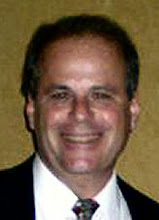
The following passage was written by Hillel Adler, a native of Ozarow, Poland:
...........................................................................................
"Everyone knew that when Shabbos approached, it would not be a day like the others. It was a matter of marking the difference between daily life and the sanctity of that day. Even the poorest people did not depart from the tradition and tried to observe the day in a dignified manner.
We relied on communal solidarity to allow this to happen. On Friday afternoon certain charitable women would knock on the doors to collect eg
 g rolls and bread for distribution to the poorest families. Among these women was Perel Youkef's, whom we named the 'Mother of the Poor.' But the housewives had already been hard at work since Thursday. The kitchens exhaled the pleasant aroma of baking cholents. The meat slowly stewed while the women peeled the potatoes which they would roast in the baking oven for Saturday's mid-day meal. And what a meal it was! Apart from the delicious cholent you could savour the 'dipine kishke' -- a stuffed casing garnished with pearl barley and fine slices of potato.
photo: Perel Youkef's Kestenbaum,The "Mother of the Poor,"and her husband Leibel.
Then came the moment to light the Sabbath candles. The mistress of the house would recite the traditional blessing. Night came, and after the meal interspersed with the 'zemiroth' or traditional Sabbath hymns, the 'Shabbos goy' came to put out the lights. As his name would indicate, this was a Catholic invited to perform tasks forbidden to Jews on the Sabbath. In his fashion, he too played his part i the observance of the holy day. During the winter, for instance, it was he who came around on Saturday morning to light the oven which would heat the entire house, and then he would show up several times more during the day to make sure that the heat was running well. On his last visit, he would receive a large portion of challe, according to custom. He would thank everyone present and wish them, in Yiddish, if you please, 'a gut'n Shabbos,' or good Sabbath. On Monday he would return to pick up his salary. There were a few men who performed this function in Ozarow, and almost all of them expressed themselves very well in Yiddish."
...........................................................................................
The exhibition "Shabbat and the Jewish Holidays" is currently composed of thirty-six webpages. These pages provides a simple explanation and significance of each holiday and importantly some stories are told by those who for the most part lived in Europe during the early twentieth century.
Hopefully, just as the Museum's "World Jewish Communities" exhibition does, these stories 'paint a picture' of what traditional Jewish life was like in pre-war Europe--in towns perhaps very much like those our families once lived in--while there still existed many 'vibrant' Jewish communities and where such Jewish traditions flourished.


 Posts
Posts