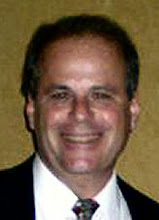
The original Hebrew language memoir of Chaim Basist of Lida, Belarus (once part of Poland), has now been translated into English and is available online for the first time at the Museum of Family History.
"The Story of the House of Plotnik-Monco-Basist" is a gripping tale in detail of family genealogy in Lida, Belarus and its environs and the Holocaust. Chaim Basist's story includes the hiding in the forests with the Bielski partisans of he and his family, and once surviving finding a permanent home in the new land of Israel.
The full English translation, as well as the original Hebrew version, can be found within the Museum's exhibition "Walk in my Shoes: Collected Memories of the Holocaust." The memoir can be found at www.museumoffamilyhistory.com/wims-basist-01.htm. A link can be found there for the Hebrew version.
Saturday, February 27, 2010

Friday, February 26, 2010
New Video Clips for Four Jewish Documentaries
The Museum of Family History has recently introduced four new film clips to its Screening Room:
--The Warsaw Ghetto 1940-1943 is documentary project that features three films. The main film is 912 Days of the Warsaw Ghetto (37 min.), and the two short ones are Children in the Ghetto and Warsaw Ghetto Uprising. These films were created for the Jewish Historical Institute as part of its permanent exhibit on the fate of Warsaw's Jews during the period from 1939 to 1945. They present the daily lives and deaths of those imprisoned in the ghetto, their hopes and efforts to survive, their armed resistance and struggle, and finally their total extermination. Unique Polish and German archival materials were used in the preparation of these films.
To see the film preview, simply use the link for film no. 24 that can be found within the main Screening Room page by clicking here.
--Paint What You Remember: Mayer Kirshenblatt left Poland for Canada in 1934. Fifty-six years later, at age seventy-three Mayer began to paint his childhood memories of prewar life in Opatów. Before Second World War Opatów (or Apt in Yiddish) had ten thousand inhabitants, more than half of them Jewish. Nowadays, little is remembered of the shtetl character of the town and of its Jewish population wiped out entirely by the Holocaust.
In this film the audience is taken on a journey through a world, which existed seventy and eighty years ago, and back to today's world. We witness how the local population in Opatów interacts with perhaps the first Jew they ever meet – a person who represents a heritage so central in the history of the place, and yet so obscure to the people who live there today. Just as the people of contemporary Opatów, the viewer are introduced to a rich and vibrant world of Jewish rituals, celebrations and sorrows, holidays and funerals, trade and poverty – all this told and painted by an eye-witness, one of the very few remaining descendants of a lost civilization.
Sadly, Mayer passed away this past year, but his life and his passion for recreating the shtetl life that once existed in Opatów lives on in not only the aforementioned film of his work, but also within two exhibitions the Museum has created. Please visit both the Museum's main Kirshenblatt exhibition, as well as his work relating to the Jewish holidays.
--Tell Me Why: What one thing that is most difficult to discuss, and which happens to only so few of us... love. We dream of it, we struggle to find it... and want to believe that if we only do, the world will become a better place. But what if love comes to us at a time we ought to forget? What happens when love is intimately linked with tragedy?
A Polish Jew, Jurek Kamieniecki was just shy of 20 when the Second World War broke out in Poland. Together with his wife Stella they managed to survive the first year of the German occupation with the help of their Polish friend Janusz Malinowski. Janusz helped Jurek enter the Polish Home Army (AK) resistance and provided him and his family with false IDs. Thanks to this, in early 1940 Stella found asylum in the territories occupied by the Soviet Red Army. Though Jurek managed to illegally cross the border to see his wife, he chose to go back to the Polish partisan troops and continue resisting Nazi occupation.
To read more of the film's synopsis and see the film clip, please
visit www.museumoffamilyhistory.com/sr-27-tell-me-why.htm.
--The Last Witness: The documentary spins a tale of Samuel Willenberg's life. He was twenty at the outbreak of the armed revolt on August 2nd of 1943 in the death camp of Treblinka in Poland. As a result of the revolt four hundred out of a thousand inmates managed to escape Treblinka. Sixty-seven of them survived the war. The narrative, however, is here and now, against the background of today's Poland and Israel.
There were only three armed mutinies in the history of Nazi death camps. The first one was in Treblinka, the second one in Sobibór on October 1943 and the third was in Birkenau (Brzezinka) in October 1944. The mutinies were caused by the world's indifference towards the Holocaust. Claude Lanzman told the Sobibór revolt story in his "Sobibor". The ‘Last Witness’ is the first film to tell the story of the Treblinka revolt. You can see the video clip at www.museumoffamilyhistory.com/sr-28-last-witness.htm.
--The Warsaw Ghetto 1940-1943 is documentary project that features three films. The main film is 912 Days of the Warsaw Ghetto (37 min.), and the two short ones are Children in the Ghetto and Warsaw Ghetto Uprising. These films were created for the Jewish Historical Institute as part of its permanent exhibit on the fate of Warsaw's Jews during the period from 1939 to 1945. They present the daily lives and deaths of those imprisoned in the ghetto, their hopes and efforts to survive, their armed resistance and struggle, and finally their total extermination. Unique Polish and German archival materials were used in the preparation of these films.
To see the film preview, simply use the link for film no. 24 that can be found within the main Screening Room page by clicking here.
--Paint What You Remember: Mayer Kirshenblatt left Poland for Canada in 1934. Fifty-six years later, at age seventy-three Mayer began to paint his childhood memories of prewar life in Opatów. Before Second World War Opatów (or Apt in Yiddish) had ten thousand inhabitants, more than half of them Jewish. Nowadays, little is remembered of the shtetl character of the town and of its Jewish population wiped out entirely by the Holocaust.
In this film the audience is taken on a journey through a world, which existed seventy and eighty years ago, and back to today's world. We witness how the local population in Opatów interacts with perhaps the first Jew they ever meet – a person who represents a heritage so central in the history of the place, and yet so obscure to the people who live there today. Just as the people of contemporary Opatów, the viewer are introduced to a rich and vibrant world of Jewish rituals, celebrations and sorrows, holidays and funerals, trade and poverty – all this told and painted by an eye-witness, one of the very few remaining descendants of a lost civilization.
Sadly, Mayer passed away this past year, but his life and his passion for recreating the shtetl life that once existed in Opatów lives on in not only the aforementioned film of his work, but also within two exhibitions the Museum has created. Please visit both the Museum's main Kirshenblatt exhibition, as well as his work relating to the Jewish holidays.
--Tell Me Why: What one thing that is most difficult to discuss, and which happens to only so few of us... love. We dream of it, we struggle to find it... and want to believe that if we only do, the world will become a better place. But what if love comes to us at a time we ought to forget? What happens when love is intimately linked with tragedy?
A Polish Jew, Jurek Kamieniecki was just shy of 20 when the Second World War broke out in Poland. Together with his wife Stella they managed to survive the first year of the German occupation with the help of their Polish friend Janusz Malinowski. Janusz helped Jurek enter the Polish Home Army (AK) resistance and provided him and his family with false IDs. Thanks to this, in early 1940 Stella found asylum in the territories occupied by the Soviet Red Army. Though Jurek managed to illegally cross the border to see his wife, he chose to go back to the Polish partisan troops and continue resisting Nazi occupation.
To read more of the film's synopsis and see the film clip, please
visit www.museumoffamilyhistory.com/sr-27-tell-me-why.htm.
--The Last Witness: The documentary spins a tale of Samuel Willenberg's life. He was twenty at the outbreak of the armed revolt on August 2nd of 1943 in the death camp of Treblinka in Poland. As a result of the revolt four hundred out of a thousand inmates managed to escape Treblinka. Sixty-seven of them survived the war. The narrative, however, is here and now, against the background of today's Poland and Israel.
There were only three armed mutinies in the history of Nazi death camps. The first one was in Treblinka, the second one in Sobibór on October 1943 and the third was in Birkenau (Brzezinka) in October 1944. The mutinies were caused by the world's indifference towards the Holocaust. Claude Lanzman told the Sobibór revolt story in his "Sobibor". The ‘Last Witness’ is the first film to tell the story of the Treblinka revolt. You can see the video clip at www.museumoffamilyhistory.com/sr-28-last-witness.htm.
Monday, February 22, 2010
"Ghosts of Home: The Afterlife of Czernowitz in Jewish Memory"
Marianne Hirsch and Leo Spitzer have written a book about Czernowitz and the Museum, within the context of its Yiddish Vinkl Bookstore, has put online a synopsis of the book along with the book's preface. Here is a synopsis of the book:
The 20th century is over. Yet displaced survivors of its horrific wars and murderous “ethnic cleansings,” and their descendants now scattered throughout the world, are still haunted by the places they or their ancestors once called “home.” Many have made it their mission to research familial and cultural pasts, to revisit ancestral homes and to retrace the steps of lost family members, even when their initial information is scant. This longing for the past continues well into the twenty-first century and, in fact, is fueled by the enhanced possibilities for research offered by the Internet and even by DNA and genetic testing. Many important and minor sites that have long ceased to exist enjoy an active afterlife on the world wide web with websites devoted to them, listservs with growing memberships, and lively communities exchanging pictures and stories about their own or their parents’ past. This desire to reconstruct lost worlds seems to cross-generational, national, and ethnic lines.
We write about the afterlife in memory and history of one such place, Czernowitz – a city in Eastern Europe where, until its shattering and dispersal in the era of the Second World War, a large and assimilated -- predominantly German-speaking -- Jewish community once flourished.
Initially fascinating to us was the fact that Czernowitz, as a political entity, had in fact ceased to exist in 1918, with the collapse of the Austro-Hungarian Habsburg Empire in the aftermath of World War I. Yet throughout its subsequent iterations – Cernauti under Romanian rule, Chernovtsi, under the Soviets – its Jewish inhabitants continued to live there as though not much had changed. They held on to what the Habsburgs had been able to offer Jews – emancipation and the promise of social integration and equality, in exchange for linguistic and cultural assimilation to Austrian ways of life. Even those who survived deportation and immense suffering under fascist/Nazi domination continued to maintain and to transmit to us -- the postwar generation -- strongly positive, nostalgic memories of a tolerant multi-ethnic city and culture that had long disappeared in reality. At the very same time, however, they also transmitted traumatic memories of persecution, deportation, displacement, and the loss of home.
Ghosts of Home follows several generations of people from this city and their descendants. Through interviews and oral accounts, memoirs, family albums, objects and memorabilia, and through a number of trips to present-day Chernivtsi (now Ukraine), we tell a multi-stranded story about twentieth century European Jews. Parts of that story are familiar: the story of Jewish assimilation and secularization, of the German-Jewish symbiosis that was to turn so tragic, of the encounter between fascism and communism, of the lure of Zionism and Hebrew, and the equally powerful lure of diaspora nationalism and Yiddish, and, of course, the story of the Holocaust. But, situated at the crossroads between East and West, and between the Soviet and Western spheres, Czernowitz also offers unknown stories about the fate of Europe’s Jews: stories of resilience, rescue and survival, of choices made in impossible circumstances, of the continuation of normality under extremity, of the perpetuation of the dream of multi-ethnic tolerance against immeasurable odds. In this first historical account in English of Czernowitz, we bring this dream to life, but we also show how the search for the past can result in active engagements with the present, even when that present is located across the world.
You can read the preface of the book at www.museumoffamilyhistory.com/yv-ghosts-of-home.htm .
The 20th century is over. Yet displaced survivors of its horrific wars and murderous “ethnic cleansings,” and their descendants now scattered throughout the world, are still haunted by the places they or their ancestors once called “home.” Many have made it their mission to research familial and cultural pasts, to revisit ancestral homes and to retrace the steps of lost family members, even when their initial information is scant. This longing for the past continues well into the twenty-first century and, in fact, is fueled by the enhanced possibilities for research offered by the Internet and even by DNA and genetic testing. Many important and minor sites that have long ceased to exist enjoy an active afterlife on the world wide web with websites devoted to them, listservs with growing memberships, and lively communities exchanging pictures and stories about their own or their parents’ past. This desire to reconstruct lost worlds seems to cross-generational, national, and ethnic lines.
We write about the afterlife in memory and history of one such place, Czernowitz – a city in Eastern Europe where, until its shattering and dispersal in the era of the Second World War, a large and assimilated -- predominantly German-speaking -- Jewish community once flourished.
Initially fascinating to us was the fact that Czernowitz, as a political entity, had in fact ceased to exist in 1918, with the collapse of the Austro-Hungarian Habsburg Empire in the aftermath of World War I. Yet throughout its subsequent iterations – Cernauti under Romanian rule, Chernovtsi, under the Soviets – its Jewish inhabitants continued to live there as though not much had changed. They held on to what the Habsburgs had been able to offer Jews – emancipation and the promise of social integration and equality, in exchange for linguistic and cultural assimilation to Austrian ways of life. Even those who survived deportation and immense suffering under fascist/Nazi domination continued to maintain and to transmit to us -- the postwar generation -- strongly positive, nostalgic memories of a tolerant multi-ethnic city and culture that had long disappeared in reality. At the very same time, however, they also transmitted traumatic memories of persecution, deportation, displacement, and the loss of home.
Ghosts of Home follows several generations of people from this city and their descendants. Through interviews and oral accounts, memoirs, family albums, objects and memorabilia, and through a number of trips to present-day Chernivtsi (now Ukraine), we tell a multi-stranded story about twentieth century European Jews. Parts of that story are familiar: the story of Jewish assimilation and secularization, of the German-Jewish symbiosis that was to turn so tragic, of the encounter between fascism and communism, of the lure of Zionism and Hebrew, and the equally powerful lure of diaspora nationalism and Yiddish, and, of course, the story of the Holocaust. But, situated at the crossroads between East and West, and between the Soviet and Western spheres, Czernowitz also offers unknown stories about the fate of Europe’s Jews: stories of resilience, rescue and survival, of choices made in impossible circumstances, of the continuation of normality under extremity, of the perpetuation of the dream of multi-ethnic tolerance against immeasurable odds. In this first historical account in English of Czernowitz, we bring this dream to life, but we also show how the search for the past can result in active engagements with the present, even when that present is located across the world.
You can read the preface of the book at www.museumoffamilyhistory.com/yv-ghosts-of-home.htm .
Saturday, February 20, 2010
New to the MOFH Film Series: The Jews of Mukacheve, 1933"
Until March 7 you can see the complete film about the Jews of Mukacheve (also known as Munkacs and Munkatch) in 1933, including the two clips previously shown at the Museum as part of its Film Series:
"Wedding of Frime Chaye Rivke Spira - daughter of Grand Rebbe Eleazer Spira of Munkatch, author of Minchas Eleazer (d. 1936), to Rabbi Rabinowitz in March 1933. She was the mother of the present Munkatcher and Dinover Rebbes. Complete version.
Includes other scenes of Jewish life in Munkacs, Hungary, both of secular and religious Jews. 1. Wedding. Huge crowds of well wishers gather in the streets on the occasion of the wedding of the Munkacs Grand Rabbi's 18 year old daughter, Frime Chaye Rivke. The Munkatcher Rebbe makes a speech in Yiddish exhorting Jews in America to continue to keep Shabbos (to observe the sabbath day). The wedding party then enters the synagogue grounds, and the cantor sings blessings beneath the wedding canopy (chupah). The wedding concludes with festive hasidic music. Newspaper accounts indicate that some 20,000 people attended the celebrations. 2. Secular Jewish children singing in Munkatch. 3. Traditional Religious Jewish children studying in Orthodox Religious School in Munkatch. 4. Book peddler and weaver in Munkatch. 5. Secular Jews dancing in Munkatch." -from YouTube.
The film can be seen at www.museumoffamilyhistory.com/fs-mukacheve-03.htm .
"Wedding of Frime Chaye Rivke Spira - daughter of Grand Rebbe Eleazer Spira of Munkatch, author of Minchas Eleazer (d. 1936), to Rabbi Rabinowitz in March 1933. She was the mother of the present Munkatcher and Dinover Rebbes. Complete version.
Includes other scenes of Jewish life in Munkacs, Hungary, both of secular and religious Jews. 1. Wedding. Huge crowds of well wishers gather in the streets on the occasion of the wedding of the Munkacs Grand Rabbi's 18 year old daughter, Frime Chaye Rivke. The Munkatcher Rebbe makes a speech in Yiddish exhorting Jews in America to continue to keep Shabbos (to observe the sabbath day). The wedding party then enters the synagogue grounds, and the cantor sings blessings beneath the wedding canopy (chupah). The wedding concludes with festive hasidic music. Newspaper accounts indicate that some 20,000 people attended the celebrations. 2. Secular Jewish children singing in Munkatch. 3. Traditional Religious Jewish children studying in Orthodox Religious School in Munkatch. 4. Book peddler and weaver in Munkatch. 5. Secular Jews dancing in Munkatch." -from YouTube.
The film can be seen at www.museumoffamilyhistory.com/fs-mukacheve-03.htm .
New to the MOFH Film Series' Al Jolson Film Festival: "Jolson Sings 'Kol Nidre'"
From now until March 7 you can see and hear Al Jolson sing "Kol Nidre."
This clip comes from the 1939 film "Hollywood Cavalcade" which features many stars such as Don Ameche and Alice Faye. The Jolson clip appears in the following scene: Don Ameche walks up to the front doors of the Criterion Theatre and asks a man standing outside, an employee of the theatre, if he can get a ticket. The man says it is standing room only, and if he doesn't mind standing, he can go in. What's playing? The 1927 film "The Jazz Singer" -- a "Vitaphone Singing Picture" starring Al Jolson as Jakie Rabinowitz, a cantor's son who wants to be in show business and not follow in his father's footsteps. Ameche walks in to the back of the theatre and hears Jolie begin "Kol Nidre." He looks up to the screen and sees and hears Jolie, replete in cantorial garb, complete the prayer.
The film clip can be seen at www.museumoffamilyhistory.com/fs-ajff-03.htm .
This clip comes from the 1939 film "Hollywood Cavalcade" which features many stars such as Don Ameche and Alice Faye. The Jolson clip appears in the following scene: Don Ameche walks up to the front doors of the Criterion Theatre and asks a man standing outside, an employee of the theatre, if he can get a ticket. The man says it is standing room only, and if he doesn't mind standing, he can go in. What's playing? The 1927 film "The Jazz Singer" -- a "Vitaphone Singing Picture" starring Al Jolson as Jakie Rabinowitz, a cantor's son who wants to be in show business and not follow in his father's footsteps. Ameche walks in to the back of the theatre and hears Jolie begin "Kol Nidre." He looks up to the screen and sees and hears Jolie, replete in cantorial garb, complete the prayer.
The film clip can be seen at www.museumoffamilyhistory.com/fs-ajff-03.htm .
New to the MOFH Film Series: The "Dance of Death" from "The Dybbuk"
From February 20 to March 7, The Museum of Family History's Yiddish World presents --
The "Dance of Death" from "The Dybbuk," a 1937 Yiddish film:
"From the 1937 Yiddish film, directed by Michal Waszynski, original music by Henoch Kon. The Dybbuk, or Between Two Worlds (Yid. דער דיבוק אדער צווישן צוויי וועלטן) is a 1914 play by S. Ansky, relating the story of a young bride possessed by a dybbuk — a malicious possessing spirit, believed to be the dislocated soul of a dead person — on the eve of her wedding.
The Dybbuk, is considered a seminal play in the history of Jewish theater, and played an important role in the development of Yiddish theatre and theatre in Israel. The play was based on years of research by S. Ansky, who travelled between Jewish shtetls in Russia and Ukraine, documenting folk beliefs and stories of the Hassidic Jews.
In 1937, the play, with some changes in the plot structure, was filmed by director Michał Waszyński in Warsaw, starring Lili Liliana as Leah, Leon Liebgold as Hannan (Channon, in the English-language subtitles), and Avrom Morevski as Rabbi Azrael ben Hodos. The film adds an additional act before those in the original play: it shows the close friendship of Sender and Nisn as young men. Besides the language of the film itself, the picture is noted among film historians for the striking scene of Leah's wedding, which is shot in the style of German Expressionism. The film is generally considered one of the finest in the Yiddish language.
The Dybbuk was filmed on location in Kazimierz, Poland, and in a Warsaw studio, in 1937."
Video and description from YouTube.
The film clip can be found at www.museumoffamilyhistory.com/yw-dybbuk-01.htm .
The "Dance of Death" from "The Dybbuk," a 1937 Yiddish film:
"From the 1937 Yiddish film, directed by Michal Waszynski, original music by Henoch Kon. The Dybbuk, or Between Two Worlds (Yid. דער דיבוק אדער צווישן צוויי וועלטן) is a 1914 play by S. Ansky, relating the story of a young bride possessed by a dybbuk — a malicious possessing spirit, believed to be the dislocated soul of a dead person — on the eve of her wedding.
The Dybbuk, is considered a seminal play in the history of Jewish theater, and played an important role in the development of Yiddish theatre and theatre in Israel. The play was based on years of research by S. Ansky, who travelled between Jewish shtetls in Russia and Ukraine, documenting folk beliefs and stories of the Hassidic Jews.
In 1937, the play, with some changes in the plot structure, was filmed by director Michał Waszyński in Warsaw, starring Lili Liliana as Leah, Leon Liebgold as Hannan (Channon, in the English-language subtitles), and Avrom Morevski as Rabbi Azrael ben Hodos. The film adds an additional act before those in the original play: it shows the close friendship of Sender and Nisn as young men. Besides the language of the film itself, the picture is noted among film historians for the striking scene of Leah's wedding, which is shot in the style of German Expressionism. The film is generally considered one of the finest in the Yiddish language.
The Dybbuk was filmed on location in Kazimierz, Poland, and in a Warsaw studio, in 1937."
Video and description from YouTube.
The film clip can be found at www.museumoffamilyhistory.com/yw-dybbuk-01.htm .
Monday, February 15, 2010
Material Needed: Jews in the Spanish Civil War
The Museum of Family History is constructing a small, online exhibition about the Spanish Civil War (which occurred between July 1936 and April 1939), especially how it affected the Jewish population both there and abroad, both as participants, e.g. soldiers/volunteers, or as civilians, and how in its aftermath created refugees, some of whom might have who immigrated to such countries as France and elsewhere.
The Museum would very much like to include personal stories from those who lived through this conflict, as well as a third person accounting of Jewish life in Spain and other locations during this period who were involved in this civil war. Perhaps you had family, e.g. from the U.S. or elsewhere, who volunteered to fight in this war, or who lived in a Spanish territory during this time.
If you lived through this period and have a story to tell (or have stories written or recorded as told to you or others from a family member or friend), or if you have photographs, family or otherwise, taken in these countries, etc., and would like to participate in this online exhibition, please contact the Museum directly at exhibitions@museumoffamilyhistory.com .
The Museum would very much like to include personal stories from those who lived through this conflict, as well as a third person accounting of Jewish life in Spain and other locations during this period who were involved in this civil war. Perhaps you had family, e.g. from the U.S. or elsewhere, who volunteered to fight in this war, or who lived in a Spanish territory during this time.
If you lived through this period and have a story to tell (or have stories written or recorded as told to you or others from a family member or friend), or if you have photographs, family or otherwise, taken in these countries, etc., and would like to participate in this online exhibition, please contact the Museum directly at exhibitions@museumoffamilyhistory.com .
Friday, February 12, 2010
Great Britain Proposes a Jewish Colony in East Africa, 1903
In August of 1903 the sixth Zionist Congress was held in Basel, Switzerland. Dr. Theodor Herzl, president of the Congress, announced to those attending that Great Britain, in view of the failure of the plan to establish Jews on the Sinai Peninsula, had offered to the Zionists a large tract of territory in East Africa for colonization by the Jews, who would have an autonomous government under British suzerainty, or control.
You can read more about this proposition in an article published in the New York Daily Tribune. Just click on the link www.museumoffamilyhistory.com/zionism-africa-01-dt.htm . Several more articles on this subject, including one that tells about the rejection of this proposition, will appear at the Museum in the coming weeks.
You can read more about this proposition in an article published in the New York Daily Tribune. Just click on the link www.museumoffamilyhistory.com/zionism-africa-01-dt.htm . Several more articles on this subject, including one that tells about the rejection of this proposition, will appear at the Museum in the coming weeks.
Wednesday, February 10, 2010
The Museum's Education and Research Center Map Room: Topographical Maps of Poland and more of the 1920s and 30s
Are you curious to see what the topography was like around the town or city in which your family lived while in Eastern Europe before World War II? Would you like to know what small towns and villages existed within a particular area before World War II?
Displayed within five web pages within the Museum's Map Room are more than one hundred topographic maps of various regions in Poland, along with some from Belarus and the Ukraine. Most maps shown have been divided into a right half and left half. All of the maps were drawn and produced between World Wars I and II. It is interesting to note the names of the various towns and villages in the surrounding areas as they appeared before World War II, as well as of course the varying topography within each region. The range of coordinates are given for each map, or rather for each two maps shown, as most of the maps shown are split into two halves.
Please visit www.museumoffamilyhistory.com/maproom-1.htm .
Displayed within five web pages within the Museum's Map Room are more than one hundred topographic maps of various regions in Poland, along with some from Belarus and the Ukraine. Most maps shown have been divided into a right half and left half. All of the maps were drawn and produced between World Wars I and II. It is interesting to note the names of the various towns and villages in the surrounding areas as they appeared before World War II, as well as of course the varying topography within each region. The range of coordinates are given for each map, or rather for each two maps shown, as most of the maps shown are split into two halves.
Please visit www.museumoffamilyhistory.com/maproom-1.htm .
Monday, February 8, 2010
A Look Back at the Coney Island of Yesteryear: A MOFH Video Presentation
Hurry, Hurry, step this way, for a nostalgic visit to the Coney Island of yesteryear!
The Museum of Family History invites you to spend an hour looking back at the once magnificent beach, boardwalk and amusement areas in Coney Island (from 1905 to 1952!), located in Brooklyn, New York. All videos come to you courtesy of YouTube. These films should be watched using Internet Explorer (though feel free to try using another browser!)
Here's what you can see for just one thin dime:
First, tag along with a group of young ladies from Miss Knapp's Select School as they spend the day at Coney Island in 1905.
Second, see Roscoe "Fatty" Arbuckle and Buster Keaton in the silent film "Coney Island." The clip shown features Beautiful Luna Park in 1917.
Third, For many decades the beach and boardwalk at Coney Island in Brooklyn, New York was the place to be on a hot summer day. There were also side shows and amusement parks with plenty of thrill rides, not to mention Nathan's famous hot dogs. See a YouTube video of the Coney Island of the 1940s and get a sense of how our family members who lived in the New York metro area spent their time more than five decades ago.
Fourth, you will see some of the Coney Island "freak show," which includes fire eaters, dancing girls and more, cir 1940s and 1950s.
Last, but not least: "Coney Island, U.S.A." (1952): "An impressionistic view of a day in the life of Coney Island from the desertion in the early morning to the hysteria at midnight. Commentary by Henry Morgan."
Come one, come all!!
The videos can be found at www.museumoffamilyhistory.com/mfh-coneyisland-ytv-01.htm .
The Museum of Family History invites you to spend an hour looking back at the once magnificent beach, boardwalk and amusement areas in Coney Island (from 1905 to 1952!), located in Brooklyn, New York. All videos come to you courtesy of YouTube. These films should be watched using Internet Explorer (though feel free to try using another browser!)
Here's what you can see for just one thin dime
First, tag along with a group of young ladies from Miss Knapp's Select School as they spend the day at Coney Island in 1905.
Second, see Roscoe "Fatty" Arbuckle and Buster Keaton in the silent film "Coney Island." The clip shown features Beautiful Luna Park in 1917.
Third, For many decades the beach and boardwalk at Coney Island in Brooklyn, New York was the place to be on a hot summer day. There were also side shows and amusement parks with plenty of thrill rides, not to mention Nathan's famous hot dogs. See a YouTube video of the Coney Island of the 1940s and get a sense of how our family members who lived in the New York metro area spent their time more than five decades ago.
Fourth, you will see some of the Coney Island "freak show," which includes fire eaters, dancing girls and more, cir 1940s and 1950s.
Last, but not least: "Coney Island, U.S.A." (1952): "An impressionistic view of a day in the life of Coney Island from the desertion in the early morning to the hysteria at midnight. Commentary by Henry Morgan."
Come one, come all!!
The videos can be found at www.museumoffamilyhistory.com/mfh-coneyisland-ytv-01.htm .
Saturday, February 6, 2010
MOFH Film Series: Now Showing, for Two Weeks Only
The current short films available within the Museum's Film Series will no longer be available for viewing beginning this coming Monday. Starting today, to be shown for two weeks, you may see the following:
"Immigration: An Instructional Film" (10:22).
Produced by the Encyclopedia Britannica Films, Inc. in 1946, this short film "reviews the history of immigration to the United States up to the restrictive law passed in 1924. A dramatized scene in a European steamship office is used to show the economic, political and religious motives for immigration. Contains scenes of Ellis Island and New York City in the early 20th century." This film plays only with Internet Explorer; however, a link is provided to another site that should enable you to play this film with other browsers.
See the Coney Island of the 1940s! (9:22).
For many decades the beach and boardwalk at Coney Island in Brooklyn, New York was the place to be on a hot summer day. There were also side shows and amusement parks with plenty of thrill rides, not to mention Nathan's famous hot dogs. See a YouTube video of the Coney Island of the 1940s and get a sense of how our family members who lived in the New York metro area spent their time more than five decades ago.
The Al Jolson Film Festival - "Broadway Highlights: Intimate News of the Gay White Way" (10:39).
This short takes us down Manhattan's Broadway in 1935 with five stops where interesting events are occurring. First at Jack Dempsey's Restaurant, there is a testimonial dinner to famed band leader, the "King of Jazz" Paul Whiteman; second a stop at the Winter Garden Theatre where there is a casting call for Earl Carroll's Vanities; third, a stop at the Hollywood Restaurant where Sophie Tucker performs "Some of these Days"; fourth we get a peek at opening night of "Ceiling Zero," a 1935 play with Osgood Perkins and Margaret Perry, performed at the Music Box Theatre on 45th Street. The final stop on this tour is the NBC building at Radio City, where there is a rehearsal for "Shell Chateau," one of Al Jolson's radio programs, with the Victor Young Orchestra and starring boxer Max Baer. Two months after this broadcast, Max Baer would lose a famed fight to down-and-out James J. Braddock (The "Cinderella Man" bout.)
World Jewish Communities: "Buying a Religious Book in Mukacheve" (1:08).
In this 1933 film clip, you can see students leaving a yeshiva and one boy seeking to by a religious book.
You can find links to these films at www.museumoffamilyhistory.com/mfh-films.htm .
"Immigration: An Instructional Film" (10:22).
Produced by the Encyclopedia Britannica Films, Inc. in 1946, this short film "reviews the history of immigration to the United States up to the restrictive law passed in 1924. A dramatized scene in a European steamship office is used to show the economic, political and religious motives for immigration. Contains scenes of Ellis Island and New York City in the early 20th century." This film plays only with Internet Explorer; however, a link is provided to another site that should enable you to play this film with other browsers.
See the Coney Island of the 1940s! (9:22).
For many decades the beach and boardwalk at Coney Island in Brooklyn, New York was the place to be on a hot summer day. There were also side shows and amusement parks with plenty of thrill rides, not to mention Nathan's famous hot dogs. See a YouTube video of the Coney Island of the 1940s and get a sense of how our family members who lived in the New York metro area spent their time more than five decades ago.
The Al Jolson Film Festival - "Broadway Highlights: Intimate News of the Gay White Way" (10:39).
This short takes us down Manhattan's Broadway in 1935 with five stops where interesting events are occurring. First at Jack Dempsey's Restaurant, there is a testimonial dinner to famed band leader, the "King of Jazz" Paul Whiteman; second a stop at the Winter Garden Theatre where there is a casting call for Earl Carroll's Vanities; third, a stop at the Hollywood Restaurant where Sophie Tucker performs "Some of these Days"; fourth we get a peek at opening night of "Ceiling Zero," a 1935 play with Osgood Perkins and Margaret Perry, performed at the Music Box Theatre on 45th Street. The final stop on this tour is the NBC building at Radio City, where there is a rehearsal for "Shell Chateau," one of Al Jolson's radio programs, with the Victor Young Orchestra and starring boxer Max Baer. Two months after this broadcast, Max Baer would lose a famed fight to down-and-out James J. Braddock (The "Cinderella Man" bout.)
World Jewish Communities: "Buying a Religious Book in Mukacheve" (1:08).
In this 1933 film clip, you can see students leaving a yeshiva and one boy seeking to by a religious book.
You can find links to these films at www.museumoffamilyhistory.com/mfh-films.htm .
MOFH Film Series: Last Day for Viewing
Tomorrow, Sunday, February 7th, will be the last day that you can see the following short films and clip as part of the new Museum of Family History's Film Series. After Sunday these films will be replace by new ones, which in turn, will only be available for viewing for two weeks (starting today):
"It's Your Story" - National Museum of American Jewish History (11:45).
The Museum, located in the heart of Philadelphia, Pennsylvania (address: Independence Mall East, 55 North 5th Street), is scheduled to open sometime during the Fall of 2010. Here you may view a nice introductory short film produced by the Museum. The Museum's website can be found at www.nmajh.org. YouTube, fast download.
The Museum's Al Jolson Film Festival - "Hollywood's Famous Feet" (8:40).
[Please note that this film clip is large and may take two minutes or longer to fully download.]
With Al Jolson doing the narration, this short presents the story behind the famous footprints and signatures outside of Grauman's Chinese Theatre in Hollywood, and many of the top names in Hollywood are on hand to view the proceedings, including John Wayne, Ralph Staub, Donna Reed, Gene Autry, Edgar Bergen, Sid Grauman, Ken Murray and John Stahl... -- per IMDb. Festival film clips come courtesy of the International Al Jolson Society (IAJS).
IAJG website: www.jolson.org .
World Jewish Communities: "The Children of Mukacheve Sing 'Hatikvah'" (0:53).
In this pre-war film clip, you can hear a couple of hundred children of Mukacheve, Hungary sing the wonderful anthem "Hatikvah."
You can find links to these clips as well as links to future film series entries at www.museumoffamilyhistory.com/mfh-films.htm .
"It's Your Story" - National Museum of American Jewish History (11:45).
The Museum, located in the heart of Philadelphia, Pennsylvania (address: Independence Mall East, 55 North 5th Street), is scheduled to open sometime during the Fall of 2010. Here you may view a nice introductory short film produced by the Museum. The Museum's website can be found at www.nmajh.org. YouTube, fast download.
The Museum's Al Jolson Film Festival - "Hollywood's Famous Feet" (8:40).
[Please note that this film clip is large and may take two minutes or longer to fully download.]
With Al Jolson doing the narration, this short presents the story behind the famous footprints and signatures outside of Grauman's Chinese Theatre in Hollywood, and many of the top names in Hollywood are on hand to view the proceedings, including John Wayne, Ralph Staub, Donna Reed, Gene Autry, Edgar Bergen, Sid Grauman, Ken Murray and John Stahl... -- per IMDb. Festival film clips come courtesy of the International Al Jolson Society (IAJS).
IAJG website: www.jolson.org .
World Jewish Communities: "The Children of Mukacheve Sing 'Hatikvah'" (0:53).
In this pre-war film clip, you can hear a couple of hundred children of Mukacheve, Hungary sing the wonderful anthem "Hatikvah."
You can find links to these clips as well as links to future film series entries at www.museumoffamilyhistory.com/mfh-films.htm .
Friday, February 5, 2010
The Evolution of the Immigrant: The Exodus of the Jew to the Upper East Side and its Causes
This 1903 article that appeared in the New York Daily-Tribune discusses the participation of Jews in the speculative real estate boom on the Upper East Side of Manhattan, which in this case refers to the area north of 59th Street.
The article states in part:
"The story of these men adjusting themselves to conditions and places is similar to that of nearly every Hebrew who once was recorded as an immigrant at Ellis Island. It is difficult for the Hebrew immigrant to forget the section of the city where he found himself and his family most welcome on arriving here. As years passed his affection for the section—the lower East Side—grew greater, if anything, and this fact was and is revealed nearly every week in many ways. Financial success caused many Hebrews to take homes uptown, but vast throngs of Hebrews who are now called wealthy, and who came to this country as immigrants, have up to the present time stood proof against all temptations to become identified in any way with any other section of the city than the lower East Side. Suddenly these Hebrews have changed "about face," and they have decided not only to become owners of tenement and flat houses in the section on the East Side north of Fifty-ninth St., but also hereafter to make their homes in that section. Is not this, indeed, an interesting spectacle in realty affairs, and an important real estate movement in the history of this city?"
This is article number 117 within the Museum's Newspaper Archives. It can be found at www.museumoffamilyhistory.com/les-upper-eastside.htm .
The article states in part:
"The story of these men adjusting themselves to conditions and places is similar to that of nearly every Hebrew who once was recorded as an immigrant at Ellis Island. It is difficult for the Hebrew immigrant to forget the section of the city where he found himself and his family most welcome on arriving here. As years passed his affection for the section—the lower East Side—grew greater, if anything, and this fact was and is revealed nearly every week in many ways. Financial success caused many Hebrews to take homes uptown, but vast throngs of Hebrews who are now called wealthy, and who came to this country as immigrants, have up to the present time stood proof against all temptations to become identified in any way with any other section of the city than the lower East Side. Suddenly these Hebrews have changed "about face," and they have decided not only to become owners of tenement and flat houses in the section on the East Side north of Fifty-ninth St., but also hereafter to make their homes in that section. Is not this, indeed, an interesting spectacle in realty affairs, and an important real estate movement in the history of this city?"
This is article number 117 within the Museum's Newspaper Archives. It can be found at www.museumoffamilyhistory.com/les-upper-eastside.htm .
Thursday, February 4, 2010
New for Poland Researchers
For those of you with an interest in the Polish towns of Augustow and Wizna, please visit the two pages I've created for these towns.
On the Augustow page you will find two calendars published by the Yagustower Progressive Association (W.C. Branch no. 77 from 1919 and 1925).
link: www.museumoffamilyhistory.com/lndsmn-augustow-01.htm .
On the Wizna page you will find an image of a pin created by the society for its members. You'll also see the photos of the gates of the society's burial plots in New York and New Jersey with a link to the unique surnames list for Wizna for all New York and New Jersey Wizna society burials. www.museumoffamilyhistory.com/lndsmn-wizna-01.htm .
Don't forget that the Museum has a page that lists the towns in Poland that are associated with the many online exhibitions at the Museum. Link: www.museumoffamilyhistory.com/poland.htm .
Also for the area of Bialystok www.museumoffamilyhistory.com/bialystok-region.htm.
There is also a Lithuania page at www.museumoffamilyhistory.com/litvak.htm .
Other recent additions mentioned in previous blog posts:
The Lodz Ghetto Cemetery Burial List:
www.museumoffamilyhistory.com/ce/ghetto/ghetto-xyz.htm .
From Kishinev to Bialystok: A Table of Pogroms From 1903-1906:
www.museumoffamilyhistory.com/ajc-yb-v08-pogroms.htm .
Instructions Imprinted on Letter Cards sent from Concentration Camps:
www.museumoffamilyhistory.com/ce/cc/cc-instructions.htm .
On the Augustow page you will find two calendars published by the Yagustower Progressive Association (W.C. Branch no. 77 from 1919 and 1925).
link: www.museumoffamilyhistory.com/lndsmn-augustow-01.htm .
On the Wizna page you will find an image of a pin created by the society for its members. You'll also see the photos of the gates of the society's burial plots in New York and New Jersey with a link to the unique surnames list for Wizna for all New York and New Jersey Wizna society burials. www.museumoffamilyhistory.com/lndsmn-wizna-01.htm .
Don't forget that the Museum has a page that lists the towns in Poland that are associated with the many online exhibitions at the Museum. Link: www.museumoffamilyhistory.com/poland.htm .
Also for the area of Bialystok www.museumoffamilyhistory.com/bialystok-region.htm.
There is also a Lithuania page at www.museumoffamilyhistory.com/litvak.htm .
Other recent additions mentioned in previous blog posts:
The Lodz Ghetto Cemetery Burial List:
www.museumoffamilyhistory.com/ce/ghetto/ghetto-xyz.htm .
From Kishinev to Bialystok: A Table of Pogroms From 1903-1906:
www.museumoffamilyhistory.com/ajc-yb-v08-pogroms.htm .
Instructions Imprinted on Letter Cards sent from Concentration Camps:
www.museumoffamilyhistory.com/ce/cc/cc-instructions.htm .
Tuesday, February 2, 2010
Instructions for sending letters, material and money to concentration camp inmates
I have received a number of translations of instructions for senders of material, money, etc. to camp inmates. These instructions were imprinted on postal cards used at concentration camps such as Auschwitz. They are instructions for those who would receive these cards from those who were incarcerated in a camp. One such translation, from an Auschwitz card, is shown below. It should be noted that such instructions were standard, as I have similar or the same exact instructions imprinted on cards from other camps such as Buchenwald, Dachau, Mauthausen, Ravensbruck, Sachsenburg, Sachsenhausen, Theresienstadt et al.
I have been informed that the Sachsenburg concentration camp was the first concentration camp to provide printed lettercards for prisoner correspondence, beginning in 1935. Of course, letters that came into and out of the various camps had to pass through censors. Often times the actual stamps on the cards were removed by the censors to see if there were any secret messages hidden under the stamps.
Below then is a translation from an Auschwitz letter card, though as I've stated, the instructions are similar or the same for other camps. By the way, I have examples of such instructions from the mid to late thirties through at least 1944. You can see other examples of such instructions at
www.museumoffamilyhistory.com/ce/cc/cc-instructions.htm . Here then is the translation from the Auschwitz letter card:
The following orders must be observed at letter exchanges with prisoners:
1) Each preventive detention prisoner is allowed to receive and send each month two letters or (post)cards from his relatives. The letter to the prisoners must be readable, written with ink, and can contain only fifteen lines per sheet. Only normal sized letter sheets are permitted. Envelopes must not be lined but simple. A single letter can contain only five stamps of 12 Pfg (= Pfennig). All others are forbidden and will be seized.
2) The sending of money is not allowed.
3) It is important that in the sending of post or the transfering of money, the exact address must consist of the name, the date of birth, and prisoner's number. If the address is not exact it will be returned or destroyed.
4) Newspapers are allowed but must be ordered at the post office of the K.L Auschwitz only. ( K.L = Konzentrations Lager).
5) Sending of parcels is not allowed since prisoners can buy anything in the camp.
6) Requests to the direction of the camp to free from preventive detention (ie. imprisonment) are pointless.
7) Permission to speak or to meet with prisoners in the Concentration Camp is absolutely not allowed.
The Commandant of the Camp.
I have been informed that the Sachsenburg concentration camp was the first concentration camp to provide printed lettercards for prisoner correspondence, beginning in 1935. Of course, letters that came into and out of the various camps had to pass through censors. Often times the actual stamps on the cards were removed by the censors to see if there were any secret messages hidden under the stamps.
Below then is a translation from an Auschwitz letter card, though as I've stated, the instructions are similar or the same for other camps. By the way, I have examples of such instructions from the mid to late thirties through at least 1944. You can see other examples of such instructions at
www.museumoffamilyhistory.com/ce/cc/cc-instructions.htm . Here then is the translation from the Auschwitz letter card:
The following orders must be observed at letter exchanges with prisoners:
1) Each preventive detention prisoner is allowed to receive and send each month two letters or (post)cards from his relatives. The letter to the prisoners must be readable, written with ink, and can contain only fifteen lines per sheet. Only normal sized letter sheets are permitted. Envelopes must not be lined but simple. A single letter can contain only five stamps of 12 Pfg (= Pfennig). All others are forbidden and will be seized.
2) The sending of money is not allowed.
3) It is important that in the sending of post or the transfering of money, the exact address must consist of the name, the date of birth, and prisoner's number. If the address is not exact it will be returned or destroyed.
4) Newspapers are allowed but must be ordered at the post office of the K.L Auschwitz only. ( K.L = Konzentrations Lager).
5) Sending of parcels is not allowed since prisoners can buy anything in the camp.
6) Requests to the direction of the camp to free from preventive detention (ie. imprisonment) are pointless.
7) Permission to speak or to meet with prisoners in the Concentration Camp is absolutely not allowed.
The Commandant of the Camp.
Monday, February 1, 2010
Within the 'Pale' of Jewish Russia, cir 1910; More for Ukraine Researchers
The Museum of Family History now has for you a 1910 newspaper article from the Herald-Republican of Salt Lake City, Utah.
Entitled "Within the 'Pale' of Jewish Russia" and written by B.T. Marshall, this article should be interesting to Ukraine researchers for a number of reasons.
First, the author of the article talks about the Jews of Kiev (spelled 'Kief' in this article), and how, despite the persecution and atrocities committed against them in the past, showed much resilience to that point and "now control the best shops, factories, theatres, etc..."
Secondly, the author talks about the Jews of Odessa; this includes an "interesting" quote from a non-Russian Jew there.
The author also describes what he believes to be the cause of the pogroms and describes Jewish life in the Pale, in the military, etc.
Thirdly, this article talks about the overall state of Russian Jewry in the Pale of Settlement during this time period. It should be an interesting read for you.
This article is one of more than one hundred articles in the Museum's Newspaper Archive which can be found at www.museumoffamilyhistory.com/archive-newspaper.htm. The article itself can be found directly at www.museumoffamilyhistory.com/eej-pale-01.htm.
More for Ukraine researchers:
The listing of much of the Museum's material of interest to Ukraine researchers can be found at www.museumoffamilyhistory.com/ukraine.htm.
And don't forget the Duma Report and listing of pogroms (1903-6), many of which occurred in what is today's Ukraine. This can be found at www.museumoffamilyhistory.com/ajc-yb-v08-pogroms.htm.
Unique surnames for burials in New York associated with society plots for nine Ukrainian towns. Learn the town names by visiting the Recent Updates page at www.museumoffamilyhistory.com/update.htm.
Lastly, you can see and hear a minute audio clip of a few dozen Jewish children in Mukacheve, Ukraine (Munkacs, Hungary) sing "Hatikvah." The link is www.museumoffamilyhistory.com/fs-mukacheve-01.htm. The last day that this clip will be available at the Museum is February 6, so see it before it goes offsite.
Entitled "Within the 'Pale' of Jewish Russia" and written by B.T. Marshall, this article should be interesting to Ukraine researchers for a number of reasons.
First, the author of the article talks about the Jews of Kiev (spelled 'Kief' in this article), and how, despite the persecution and atrocities committed against them in the past, showed much resilience to that point and "now control the best shops, factories, theatres, etc..."
Secondly, the author talks about the Jews of Odessa; this includes an "interesting" quote from a non-Russian Jew there.
The author also describes what he believes to be the cause of the pogroms and describes Jewish life in the Pale, in the military, etc.
Thirdly, this article talks about the overall state of Russian Jewry in the Pale of Settlement during this time period. It should be an interesting read for you.
This article is one of more than one hundred articles in the Museum's Newspaper Archive which can be found at www.museumoffamilyhistory.com/archive-newspaper.htm. The article itself can be found directly at www.museumoffamilyhistory.com/eej-pale-01.htm.
More for Ukraine researchers:
The listing of much of the Museum's material of interest to Ukraine researchers can be found at www.museumoffamilyhistory.com/ukraine.htm.
And don't forget the Duma Report and listing of pogroms (1903-6), many of which occurred in what is today's Ukraine. This can be found at www.museumoffamilyhistory.com/ajc-yb-v08-pogroms.htm.
Unique surnames for burials in New York associated with society plots for nine Ukrainian towns. Learn the town names by visiting the Recent Updates page at www.museumoffamilyhistory.com/update.htm.
Lastly, you can see and hear a minute audio clip of a few dozen Jewish children in Mukacheve, Ukraine (Munkacs, Hungary) sing "Hatikvah." The link is www.museumoffamilyhistory.com/fs-mukacheve-01.htm. The last day that this clip will be available at the Museum is February 6, so see it before it goes offsite.
Thursday, January 28, 2010
Congregation Shearith Israel, a.k.a. the Spanish-Portuguese Synagogue, of New York, cir 1897
Congregation Shearith Israel, also known as the Spanish and Portuguese Synagogue is located in New York City, and has used five buildings during its long history as places of worship. The congregation's first synagogue was readied for worship in 1730 on Mill Street (though the first Spanish and Portuguese Jews arrived in New York in 1654).
The fifth building used as a synagogue by the congregation was located on West 70th Street, beginning in 1897.
I have just put an article from the New York Daily Tribune (dated May 23, 1897) on my Museum website that discusses not only the dedication of the building, on West 70th Street, but also describes events there (Services) as well as such notables as Rev. Dr. Sabato Morais (Philadelphia), Rev. Nieto and Rev. Mendola De Sola (of Montreal). An interesting read.
The article can be found at www.museumoffamilyhistory.com/syn-nyc-shearith-israel-01.htm.
I hope to put on more interesting articles to researchers with Sephardic roots. A listing of the Museum's more than one hundred articles can be found at www.museumoffamilyhistory.com/archive-newspaper.htm.
The fifth building used as a synagogue by the congregation was located on West 70th Street, beginning in 1897.
I have just put an article from the New York Daily Tribune (dated May 23, 1897) on my Museum website that discusses not only the dedication of the building, on West 70th Street, but also describes events there (Services) as well as such notables as Rev. Dr. Sabato Morais (Philadelphia), Rev. Nieto and Rev. Mendola De Sola (of Montreal). An interesting read.
The article can be found at www.museumoffamilyhistory.com/syn-nyc-shearith-israel-01.htm.
I hope to put on more interesting articles to researchers with Sephardic roots. A listing of the Museum's more than one hundred articles can be found at www.museumoffamilyhistory.com/archive-newspaper.htm.
Sunday, January 24, 2010
Lodz Ghettto Cemetery Burial List
In advance of the Museum's large online exhibition later this year about many of the Jewish Ghettos of Europe, I thought it would be good to make available to you two lists comprised of nearly fourteen hundred names of Jewish residents who perished in the Lódz Ghetto and were buried in the cemetery there. You needn't look up a specific person's name in a database; they are all there for you to see on a single web page.
These lists are by no means complete, as there were no doubt many more of our ancestors who died in the Ghetto and were buried there. However, these lists might just help some of you who had family in the Ghetto during World War II with your Lódz family research. The lists give the names of the deceased, and often the father's name, the date of death and age at death.
The lists come to you courtesy of the Lódz Jewish community through the agency of Yad LeZehava (YZI) in Kedumim Israel and with the dedicated cooperation of the officers and men in the IDF 'Witnesses in Uniform' Program.
The lists can be found at www.museumoffamilyhistory.com/ce/ghetto/lodz-ghetto-cemetery.htm.
These lists are by no means complete, as there were no doubt many more of our ancestors who died in the Ghetto and were buried there. However, these lists might just help some of you who had family in the Ghetto during World War II with your Lódz family research. The lists give the names of the deceased, and often the father's name, the date of death and age at death.
The lists come to you courtesy of the Lódz Jewish community through the agency of Yad LeZehava (YZI) in Kedumim Israel and with the dedicated cooperation of the officers and men in the IDF 'Witnesses in Uniform' Program.
The lists can be found at www.museumoffamilyhistory.com/ce/ghetto/lodz-ghetto-cemetery.htm.
Saturday, January 23, 2010
Brooklyn's 16th Ward Ghetto in 1899
Another article, this one from an 1899 edition of the Brooklyn Daily-Eagle, in which a reporter is taken on a tour of the then Sixteenth Ward--the Brunswick/East Williamsburg area of Brooklyn--and reports on the deplorable conditions he found there. The article starts in part:
There are many sweatshops in the Sixteenth Ward Ghetto which, from time to time, have been inspected by the Health authorities of this borough.... Great numbers of garments, cheap and costly, such as are worn by men, women and children, are made in these shops, and these goods are sold in every borough of Greater New York. For this reason, my reader, if for no other, you have a personal interest in this Ghetto, as you will see even by even brief reflection. For the germs of deadly disease maybe conveyed long distances in clothing. The makers of these skirts, cloaks, shirts, trousers, overcoats and children's clothing are, for a great part, Polish and Russian Jews, who toil in such unsanitary shops....and [they] live in miserable little rooms of poorly constructed old wooden tenements. Hundreds of these toilers cannot speak English, are unfamiliar with our laws and customs, have come from lands in which oppression and dire poverty drove them into wretched habitations from which pure air, sunshine and the water necessarily to cleanliness were shut out....
You can read the full article at www.museumoffamilyhistory.com/bklyn-16thwardghetto.htm.
You can chooose from more than one hundred other articles published around the turn of the twentieth century at www.museumoffamilyhistory.com/archive-newspaper.htm.
There are many sweatshops in the Sixteenth Ward Ghetto which, from time to time, have been inspected by the Health authorities of this borough.... Great numbers of garments, cheap and costly, such as are worn by men, women and children, are made in these shops, and these goods are sold in every borough of Greater New York. For this reason, my reader, if for no other, you have a personal interest in this Ghetto, as you will see even by even brief reflection. For the germs of deadly disease maybe conveyed long distances in clothing. The makers of these skirts, cloaks, shirts, trousers, overcoats and children's clothing are, for a great part, Polish and Russian Jews, who toil in such unsanitary shops....and [they] live in miserable little rooms of poorly constructed old wooden tenements. Hundreds of these toilers cannot speak English, are unfamiliar with our laws and customs, have come from lands in which oppression and dire poverty drove them into wretched habitations from which pure air, sunshine and the water necessarily to cleanliness were shut out....
You can read the full article at www.museumoffamilyhistory.com/bklyn-16thwardghetto.htm.
You can chooose from more than one hundred other articles published around the turn of the twentieth century at www.museumoffamilyhistory.com/archive-newspaper.htm.
Friday, January 22, 2010
Museum's Cemetery Project: New Unique Surnames Lists Ready for Viewing
The gravestones in the following society plots have been photographed and the names of the deceased recorded. The plots are listed by the name of the town that is associated with each plot.
You can find the links to these lists at www.museumoffamilyhistory.com/cp-townlist.htm. If you find a surname of interest and would like the photo sent to you, please email the Museum at postmaster@museumoffamilyhistory.com and indicate the surname and the town associated with the listing. Here are the towns:
Budanov, Ukraine
Lokachi, Ukraine
Bitola/Monastir, Yugoslavia/Macedonia
Pukhovichi, Belarus
Khoshchevatoye, Ukraine
Stavishche, Ukraine
Divin, Belarus
Pomoryany, Ukraine
Shargorod, Ukraine
Novogrudok, Belarus
Raygorodok, Ukraine
Shumskoye, Ukraine
Voynilov, Ukraine
There are other society plots for each town located within other cemeteries within the New York metro area, but these burials are from Beth Moses Cemetery only in Pinelawn, New York. There are no plans to photograph the other plots for the towns noted.
Thursday, January 21, 2010
The Jewish Children of Mukacheve, Hungary Sing "Hatikvah"
I have added a third short film (fifty-three seconds) to the current MOFH Film Series showings.
You can now see and hear a couple of hundred Jewish children sing "Hatikvah" in pre-World (1933) War II Mukacheve (Munkacs), Hungary. The link is www.museumoffamilyhistory.com/fs-mukacheve-01.htm. The clip is in an mp4 format and is best seen and heard using Internet Explorer.
You can now see and hear a couple of hundred Jewish children sing "Hatikvah" in pre-World (1933) War II Mukacheve (Munkacs), Hungary. The link is www.museumoffamilyhistory.com/fs-mukacheve-01.htm. The clip is in an mp4 format and is best seen and heard using Internet Explorer.
Wednesday, January 20, 2010
MOFH New Film Series
As most of the Museum's fans already know, there is a great number of both audio and video clips on display within the Museum. One may, for instance, watch any of more than two dozen video clips--previews created from documetaries with a Jewish theme. The link is www.museumoffamilyhistory.com/screeningroom.htm.
There are also many, many sound clips that are also available for "your listening pleasure." You may access the lists of all the audio and video content found within the Museum by visiting www.museumoffamilyhistory.com/multimedia.htm.
The Museum of Family History, always wishing to add more interesting features and content, would like to announce the creation of its new "MFOH Film Series," which will present short films or clips shown nowhere else on the Museum's website. What is different about this Series--as opposed to other content on its site--is that these films will only be available for a short period of time, i.e. usually from one day to one week, and then it will no longer be available at the Museum for viewing.
The dates of each film showing will be stated on the Museum's Film Series page.
From Sunday, January 24 to Saturday, February 6th, you can see two short films (those who visit the Museum blog may have an earlier viewing of these two films beginning today).
The first two filma available for viewing are (the duration of the clip is indicated within the parentheses):
"It's Your Story" - National Museum of American Jewish History (11:45).
The Museum, located in the heart of Philadelphia, Pennsylvania (address: Independence Mall East, 55 North 5th Street), is scheduled to open sometime during the Fall of 2010. Here you may view a nice introductory short film produced by the Museum. The Museum's website can be found at http://www.nmajh.org/.
The Al Jolson Film Festival - "Hollywood's Famous Feet" (8:40).
With Al Jolson doing the narration, this short presents the story behind the famous footprints and signatures outside of Grauman's Chinese Theatre in Hollywood, and many of the top names in Hollywood are on hand to view the proceedings, including John Wayne, Ralph Staub, Donna Reed, Gene Autry, Edgar Bergen, Sid Grauman, Ken Murray and John Stahl... -- per IMDb. Festival film clips come courtesy of the International Al Jolson Society (IAJS).
Website: http://www.jolson.org/. This clip is presented to you in an mp4 format, so hopefully you will be able to watch it. Please be patient and wait for it to load--it make take one minute or longer, depending on the speed of your Internet connection. More Jolson Festival clips will follow after February 6.
You can access both short films by using the links provided at www.museumoffamilyhistory.com/mfh-films.htm. Future films will be included on this webpage in the near future.
There are also many, many sound clips that are also available for "your listening pleasure." You may access the lists of all the audio and video content found within the Museum by visiting www.museumoffamilyhistory.com/multimedia.htm.
The Museum of Family History, always wishing to add more interesting features and content, would like to announce the creation of its new "MFOH Film Series," which will present short films or clips shown nowhere else on the Museum's website. What is different about this Series--as opposed to other content on its site--is that these films will only be available for a short period of time, i.e. usually from one day to one week, and then it will no longer be available at the Museum for viewing.
The dates of each film showing will be stated on the Museum's Film Series page.
From Sunday, January 24 to Saturday, February 6th, you can see two short films (those who visit the Museum blog may have an earlier viewing of these two films beginning today).
The first two filma available for viewing are (the duration of the clip is indicated within the parentheses):
"It's Your Story" - National Museum of American Jewish History (11:45).
The Museum, located in the heart of Philadelphia, Pennsylvania (address: Independence Mall East, 55 North 5th Street), is scheduled to open sometime during the Fall of 2010. Here you may view a nice introductory short film produced by the Museum. The Museum's website can be found at http://www.nmajh.org/.
The Al Jolson Film Festival - "Hollywood's Famous Feet" (8:40).
With Al Jolson doing the narration, this short presents the story behind the famous footprints and signatures outside of Grauman's Chinese Theatre in Hollywood, and many of the top names in Hollywood are on hand to view the proceedings, including John Wayne, Ralph Staub, Donna Reed, Gene Autry, Edgar Bergen, Sid Grauman, Ken Murray and John Stahl... -- per IMDb. Festival film clips come courtesy of the International Al Jolson Society (IAJS).
Website: http://www.jolson.org/. This clip is presented to you in an mp4 format, so hopefully you will be able to watch it. Please be patient and wait for it to load--it make take one minute or longer, depending on the speed of your Internet connection. More Jolson Festival clips will follow after February 6.
You can access both short films by using the links provided at www.museumoffamilyhistory.com/mfh-films.htm. Future films will be included on this webpage in the near future.
Thursday, January 14, 2010
The Museum of Family History, a New Member of the Association of Holocaust Organizations
The Museum of Family History is pleased to announce that it has been accepted as a member of the AHO, i.e. the Association of Holocaust Organizations. The AHO has, as its members, over two hundred and eighty organizations, including the United States Holocaust Memorial Museum and the Museum of Jewish Heritage.
According to the AHO, The Association of Holocaust Organizations was established in 1985 to serve as an international network of organizations and individuals for the advancement of Holocaust education, remembrance and research.
The AHO website can be found at http://www.ahoinfo.org/.
According to the AHO, The Association of Holocaust Organizations was established in 1985 to serve as an international network of organizations and individuals for the advancement of Holocaust education, remembrance and research.
The AHO website can be found at http://www.ahoinfo.org/.
Call for Material: "The Jewish Ghetto" and "Never Forget: Visions of the Nazi Camps"
Many new online exhibitions are being planned for 2010 at the virtual Museum of Family History. Two such exhibitions are entitled "The Jewish Ghetto" and "Never Forget: Visions of the Nazi Camps."
"The Jewish Ghetto" will feature information about and photographs of many of the ghettos that once existed. There will also be first-hand testimony given by some of those who were forced to live in these ghettos during the Second World War, not only in written form, but also as short audio-visual clips.
The Museum depends on people like you for material to build its exhibitions. So, with that in mind, the Museum would like to send out a "call for material" to all of you for any material you possess that you think might fit in well with this exhibition. It is preferred that you not send any original material and that you send what you have as jpegs or Word documents by email.
Have you photographs of any of the ghettos? Written testimony from someone who lived in a ghetto (or perhaps you yourself lived in one)? Have you either audio or video testimony, where you recount your experiences in the ghetto? Are you the translator of a Yizkor book that contains testimony of those who lived in a ghetto?
If you have any questions, please contact me (Steve) at steve@museumoffamilyhistory.com .
------------------------------
Another exhibition in the works is an augmentation of an ongoing exhibition of the same name that currently contains photographs taken within the last ten or so years of the former concentration camps of Europe, which today mostly serve as memorials and museums. The new exhibition "Never Forget: Visions of the Nazi Camps" will be similar to the "Ghetto" exhibition in that it will tell about many of the concentration, labor and transit camps in both first- and third-person.
The Museum is looking for testimony for this exhibition as well as that of the "Ghetto" exhibition. The Museum also needs current-day photographs (ie. within the last two decades) of many of the former concentration, labor, and transit camps. The Museum has a limited collection, but is in need of more, i.e. photographs of former camps not included within its current collection. If you have any such photographs, please contact me at steve@museumoffamilyhistory.com first before you send them, in order to make sure that they are needed.
"The Jewish Ghetto" will feature information about and photographs of many of the ghettos that once existed. There will also be first-hand testimony given by some of those who were forced to live in these ghettos during the Second World War, not only in written form, but also as short audio-visual clips.
The Museum depends on people like you for material to build its exhibitions. So, with that in mind, the Museum would like to send out a "call for material" to all of you for any material you possess that you think might fit in well with this exhibition. It is preferred that you not send any original material and that you send what you have as jpegs or Word documents by email.
Have you photographs of any of the ghettos? Written testimony from someone who lived in a ghetto (or perhaps you yourself lived in one)? Have you either audio or video testimony, where you recount your experiences in the ghetto? Are you the translator of a Yizkor book that contains testimony of those who lived in a ghetto?
If you have any questions, please contact me (Steve) at steve@museumoffamilyhistory.com .
------------------------------
Another exhibition in the works is an augmentation of an ongoing exhibition of the same name that currently contains photographs taken within the last ten or so years of the former concentration camps of Europe, which today mostly serve as memorials and museums. The new exhibition "Never Forget: Visions of the Nazi Camps" will be similar to the "Ghetto" exhibition in that it will tell about many of the concentration, labor and transit camps in both first- and third-person.
The Museum is looking for testimony for this exhibition as well as that of the "Ghetto" exhibition. The Museum also needs current-day photographs (ie. within the last two decades) of many of the former concentration, labor, and transit camps. The Museum has a limited collection, but is in need of more, i.e. photographs of former camps not included within its current collection. If you have any such photographs, please contact me at steve@museumoffamilyhistory.com first before you send them, in order to make sure that they are needed.
Friday, January 8, 2010
Museum of Family History Update for January 2010
A Happy New Year to all. This year promises many new and interesting exhibitions at the virtual Museum of Family History, so keep reading the Museum blog to learn of all that's new and exciting.
Here is a summary of what new material and exhibitions were added to the Museum of Family History over the past month or so. This summary does not include all that was added; for that you will need to read the previous Museum's blog entries. Here, though, is a summary, of what's new:
1. "The Jews of Asia." The Museum's first offering to you is an exhibition entitled "Synagogues and Memorials." Currently you can see photographs of synagoggues taken in the 1990s and 2000s in the following locations: Hong Kong and Shanghai, China; Bombay (Mumbai) and Cochin (Kochi) in India; Rangoon (Yangon) in Burma (Myanmar), Singapore, Tajikistan, Lebanon and
Istanbul, Turkey (i.e. the Asian side of the Bosphorus). www.museumoffamilyhistory.com/ce/jasia/jasia.htm
The Museum is looking for material for an uncoming exhibition about the Jews of Asia, so if any of you possess or can obtain material that can be used in this exhibition, please contact me at steve@museumoffamilyhistory.com . Such material can include one's biography that includes an account of one's time spent in Asia at any time up until 1960. Photos, audio-video are always welcome.
2. All sections of the 1905/1907 book "The Immigrant Jew in America" is now available to you at the Museum. You can now read about the Russian Jew of Chicago, as well as the Russian Jews of New York and Philadelphia. The exhibition's table of contents can be found at www.museumoffamilyhistory.com/ija-contents.htm
3. Anti-Semitism in Europe - Letters from Leipzig: Within the six years preceding the start of World War II, a non-Jewish German woman named Ilse Gerngrofs wrote four letters to a Jewish friend in New Zealand (not knowing she was Jewish). The Museum presents these to you now so that they may serve as an example of the anti-Semitic sentiments that existed in Germany before and after Hitler came into power. These letters are very offensive, but
worth reading. The link is www.museumoffamilyhistory.com/as-letters-leipzig.htm
4. Synagogues of Europe: Greece: Athens, Corfu, Rhodes and Thesssalonika; Spain: Madrin and Toledo; Ukraine: Husiatyn and Zastavna. www.museumoffamilyhistory.com/mfh-syn-europe.htm
5. Newspaper Archives: There are now over one-hundred articles available for
your perusal. Please visit the archives at www.museumoffamilyhistory.com/archive-newspaper.htm to see what might be of interest to you. There are now over two dozen articles published between the 1880s and 1906 about the Lower East Side of Manhattan. Reading these
articles is a great way to get a feel for Jewish life there more than one hundred years ago. There are even two short film clips for you to see, made in 1903, showing scenes of the Lower East Side.
6. For those of you who don't already know, The Museum has placed online an important report and a table of pogroms that occurred between 1903 and 1906. First, you will be able to read over the introduction and commentary to all of this as published by the American Jewish Committee in their American Jewish Year Book, Volume 8 (1906-1907). Secondly, you will be able to peruse a table of more than two hundred and fifty towns and cities in Europe where
pogroms occurred. Within this table is a listing of the damage caused in these locations (when available), as well as some general remarks made about each pogrom. You will also find for each pogrom event listed, the date of occurrence, the name of the town or city, the gubernia, the overall population of the location and the Jewish population, though numbers are not given for every town or city. There is also a supplemental table of pogroms in other locations in November 1905 not included in this larger table. There are also articles about the pogroms in Gomel, Belarus and Bialystok, Poland. www.museumoffamilyhistory.com/ajc-yb-v08-pogroms.htm
Here is a summary of what new material and exhibitions were added to the Museum of Family History over the past month or so. This summary does not include all that was added; for that you will need to read the previous Museum's blog entries. Here, though, is a summary, of what's new:
1. "The Jews of Asia." The Museum's first offering to you is an exhibition entitled "Synagogues and Memorials." Currently you can see photographs of synagoggues taken in the 1990s and 2000s in the following locations: Hong Kong and Shanghai, China; Bombay (Mumbai) and Cochin (Kochi) in India; Rangoon (Yangon) in Burma (Myanmar), Singapore, Tajikistan, Lebanon and
Istanbul, Turkey (i.e. the Asian side of the Bosphorus). www.museumoffamilyhistory.com/ce/jasia/jasia.htm
The Museum is looking for material for an uncoming exhibition about the Jews of Asia, so if any of you possess or can obtain material that can be used in this exhibition, please contact me at steve@museumoffamilyhistory.com . Such material can include one's biography that includes an account of one's time spent in Asia at any time up until 1960. Photos, audio-video are always welcome.
2. All sections of the 1905/1907 book "The Immigrant Jew in America" is now available to you at the Museum. You can now read about the Russian Jew of Chicago, as well as the Russian Jews of New York and Philadelphia. The exhibition's table of contents can be found at www.museumoffamilyhistory.com/ija-contents.htm
3. Anti-Semitism in Europe - Letters from Leipzig: Within the six years preceding the start of World War II, a non-Jewish German woman named Ilse Gerngrofs wrote four letters to a Jewish friend in New Zealand (not knowing she was Jewish). The Museum presents these to you now so that they may serve as an example of the anti-Semitic sentiments that existed in Germany before and after Hitler came into power. These letters are very offensive, but
worth reading. The link is www.museumoffamilyhistory.com/as-letters-leipzig.htm
4. Synagogues of Europe: Greece: Athens, Corfu, Rhodes and Thesssalonika; Spain: Madrin and Toledo; Ukraine: Husiatyn and Zastavna. www.museumoffamilyhistory.com/mfh-syn-europe.htm
5. Newspaper Archives: There are now over one-hundred articles available for
your perusal. Please visit the archives at www.museumoffamilyhistory.com/archive-newspaper.htm to see what might be of interest to you. There are now over two dozen articles published between the 1880s and 1906 about the Lower East Side of Manhattan. Reading these
articles is a great way to get a feel for Jewish life there more than one hundred years ago. There are even two short film clips for you to see, made in 1903, showing scenes of the Lower East Side.
6. For those of you who don't already know, The Museum has placed online an important report and a table of pogroms that occurred between 1903 and 1906. First, you will be able to read over the introduction and commentary to all of this as published by the American Jewish Committee in their American Jewish Year Book, Volume 8 (1906-1907). Secondly, you will be able to peruse a table of more than two hundred and fifty towns and cities in Europe where
pogroms occurred. Within this table is a listing of the damage caused in these locations (when available), as well as some general remarks made about each pogrom. You will also find for each pogrom event listed, the date of occurrence, the name of the town or city, the gubernia, the overall population of the location and the Jewish population, though numbers are not given for every town or city. There is also a supplemental table of pogroms in other locations in November 1905 not included in this larger table. There are also articles about the pogroms in Gomel, Belarus and Bialystok, Poland. www.museumoffamilyhistory.com/ajc-yb-v08-pogroms.htm
Tuesday, December 29, 2009
Correction: URL for Lower East Side of New York Exhibition
The correct URL for the Museum's "Lower East Side of New York" exhibition is www.museumoffamilyhistory.com/les.htm . It is listed incorrectly in the previous posting.
Also it has been pointed out that the video clip on this page as well as the one included on the Lower East Side fishmongers page is not viewable using either the Firefox or Safari browser and currently must be viewed using Internet Explorer. The situation is currently being worked on and if and when it is remedied, it will be announced on this blog. Please stay tuned....
Also it has been pointed out that the video clip on this page as well as the one included on the Lower East Side fishmongers page is not viewable using either the Firefox or Safari browser and currently must be viewed using Internet Explorer. The situation is currently being worked on and if and when it is remedied, it will be announced on this blog. Please stay tuned....
Short film clip of the Lower East Side, 1903
You can now keep abreast of all the new material the Museum puts online by using the link www.museumoffamilyhistory.com/les-htm . On this webpage, if you click on the arrow in the center of the frame, you can play a silent minute and a half film clip taken on the Lower East Side in 1903.
Further, if you scroll down to the bottom of the page, you can click on the words "Enter here" and you can peruse the entire list of old articles about the Lower East Side that appear at the Museum. The articles currently number twenty-five with more to come. Each listing comes with a link to the pertinent article.
Further, if you scroll down to the bottom of the page, you can click on the words "Enter here" and you can peruse the entire list of old articles about the Lower East Side that appear at the Museum. The articles currently number twenty-five with more to come. Each listing comes with a link to the pertinent article.
"The Jewish Ghetto," coming in 2010
The Museum of Family History is currently working on an exhibition due out in 2010 entitled "The Jewish Ghetto." It will predominantly be about the ghettos created during the Second World War into which Jewish citizens were forceably relocated. The exhibition will include photographs, first and third person accounts, newspaper articles, audio clips and more.
It is requested of you, the Museum blog reader, to participate in this exhibition by sending the Museum, primarily via email at postmaster@museumoffamilyhistory.com, material you might have that can be used in this exhibition, having to do with these ghettos. If you have any questions about what material might be useful, etc., please contact the Museum at the aforementioned email address.
This is a "people's museum," so to speak, so your participation is greatly encouraged.
It is requested of you, the Museum blog reader, to participate in this exhibition by sending the Museum, primarily via email at postmaster@museumoffamilyhistory.com, material you might have that can be used in this exhibition, having to do with these ghettos. If you have any questions about what material might be useful, etc., please contact the Museum at the aforementioned email address.
This is a "people's museum," so to speak, so your participation is greatly encouraged.
Sunday, December 27, 2009
What Was it Like to Attend Services in an East Side Synagogue in 1905?
So, maybe you've wondered what it was like to attend religious services at a Lower East Side synagogue at the start of the twentieth century?? The Museum has already given you so many glimpses into Jewish life on the Lower East Side, this is but another for you to read about and learn about, and an important one at that.
You can certainly form a visual impression of these services by reading the Museum's 25th article within its "Lower East Side of New York" series entitled "Impressive Services in Synagogues of the Ghetto."
Especially mentioned here is the Chaari Zedek Synagogue and their cantor, A. Minkowsky (who had arrived not long ago from Odessa). Also mentioned in this article is a synagogue on Forsyth Street (probably the Kol Israel Ansche Poland synagogue), Kahal Adath Jeshurun (on Eldridge Street), and two locations where many poor Russian Jews would go to pray, the Henry Street Synagogue and the People's Synagogue, the latter of which was sponsored by the Educational Alliance.
Enjoy!
You can access this article by clicking here.
You can certainly form a visual impression of these services by reading the Museum's 25th article within its "Lower East Side of New York" series entitled "Impressive Services in Synagogues of the Ghetto."
Especially mentioned here is the Chaari Zedek Synagogue and their cantor, A. Minkowsky (who had arrived not long ago from Odessa). Also mentioned in this article is a synagogue on Forsyth Street (probably the Kol Israel Ansche Poland synagogue), Kahal Adath Jeshurun (on Eldridge Street), and two locations where many poor Russian Jews would go to pray, the Henry Street Synagogue and the People's Synagogue, the latter of which was sponsored by the Educational Alliance.
Enjoy!
You can access this article by clicking here.
Saturday, December 26, 2009
The Litvak and Galitzianer East Side Tailor: How Both Tried to Better Themselves in the 1890s
It seems that there were two ghettos, or Jewish quarters, on the Lower East Side in the 1890s, at least according to an article published in an 1895 edition of the Sun newspaper of New York City. There was the Russian or Lithuanian (or Litvak) quarter, mostly situated around Hester Street, and a quarter surrounding Pitt Street, where many Galicians, Hungarians and Bohemians lived. Both had their own "Pig Markets," which meant that at that time one could buy almost anything in those markets except pork.
It is pointed out that the Russians far outnumbered the Austrian workers, but that the Austrian worker made up for their lack of numbers by their higher grade of work.
The author of this article compares and contrasts those living in both quarters, and describes how, for instance, the tailors involved in the coat-making industry of both quarters tried to better themselves, e.g. to learn English, and to better educate themselves in order to advance at work, etc.
You can read the interesting article, entitled "New York's Two Ghettos," by clicking here.
It is pointed out that the Russians far outnumbered the Austrian workers, but that the Austrian worker made up for their lack of numbers by their higher grade of work.
The author of this article compares and contrasts those living in both quarters, and describes how, for instance, the tailors involved in the coat-making industry of both quarters tried to better themselves, e.g. to learn English, and to better educate themselves in order to advance at work, etc.
You can read the interesting article, entitled "New York's Two Ghettos," by clicking here.
Thursday, December 24, 2009
The Fishmongers of Fulton Street, 1903
Might any of your family members have shopped for fish on the Lower East Side at the Fulton Street Fish Market around 1903?
You can now read an article that talks about that place during that time and discusses the various personalities that were well known to those who worked at and frequented the Fulton Street Fish Market.
Also, the Museum has added a video-only clip of more than two minutes (courtesy of the Internet Archive and Library of Congress) of an East Side fish market, filmed on May 1, 1903, less than five months after this article was published in the New York Daily Tribune.
This article details yet another interesting aspect of daily life that existed for Jews and non-Jews alike on the East Side of Manhattan at the turn of the twentieth century.
The article can be found by clicking here.
You can now read an article that talks about that place during that time and discusses the various personalities that were well known to those who worked at and frequented the Fulton Street Fish Market.
Also, the Museum has added a video-only clip of more than two minutes (courtesy of the Internet Archive and Library of Congress) of an East Side fish market, filmed on May 1, 1903, less than five months after this article was published in the New York Daily Tribune.
This article details yet another interesting aspect of daily life that existed for Jews and non-Jews alike on the East Side of Manhattan at the turn of the twentieth century.
The article can be found by clicking here.
Monday, December 21, 2009
"The Russian Jew in the United States" -- Entire book now online
Many of you, those of you who follow the progress of the Museum of Family History, are already familiar with the Museum's exhibition, "The Russian Jew in the United States," which is based on the book of the same name. The book is also known as "The Immigrant Jew in America," both being published as separate editions between 1905 and 1907.
It should be noted that simply because the title implies that the book is about "the Russian Jew," i.e. the Russian Jew in America, during the time the book was written and published, Russia, or rather the Russian Empire, was composed of more countries (or parts of countries) than Russia alone. The editor distinguishes the Russian population in the United States from the Spanish-Portuguese and German populations, each being considered a "distinctly marked strata of population."
The Museum would like to announce that the entire book (with minor exceptions) is now online at the Museum of Family History and is ready for your perusal. The first part of the book was put online in time for the IAJGS Philadelphia 2009 conference. Post-conference the New York section was added, and just completed is the section about Chicago. I recommend that you at least "leaf through" the three sections; perhaps you will find material of interest to you. It does give a good picture of what Jewish life was like around the turn of the twentieth century for many Jewish immigrants.
Each major part of the book, i.e. for Philadelphia, New York and Chicago, is composed of ten sections, i.e. the introduction, "General Aspects of the Population," "Philanthropy," "Economic and Industrial Condition," "Religious Activity," "Educational Influences," "Amusements and Social Life," "Politics," "Health and Sanitation," and "Law and Litigation." Separate sections published irrespective of any particular city, are named "Distribution," and "Rural Settlements" in the Eastern and Western States. There are also pages dedicated to the Jew in Russia as well as the Russian Jew in the U.S., the latter written by famed Abraham Cahan, editor and founder of the Yiddish newspaper, the Jewish Daily Forward.
The link to the overall exhibition is www.museumoffamilyhistory.com/ija-main.htm. Simply click on the "enter" link found within the bottom half of the paqe. You may then chose the section or sections of your liking.
It should be noted that simply because the title implies that the book is about "the Russian Jew," i.e. the Russian Jew in America, during the time the book was written and published, Russia, or rather the Russian Empire, was composed of more countries (or parts of countries) than Russia alone. The editor distinguishes the Russian population in the United States from the Spanish-Portuguese and German populations, each being considered a "distinctly marked strata of population."
The Museum would like to announce that the entire book (with minor exceptions) is now online at the Museum of Family History and is ready for your perusal. The first part of the book was put online in time for the IAJGS Philadelphia 2009 conference. Post-conference the New York section was added, and just completed is the section about Chicago. I recommend that you at least "leaf through" the three sections; perhaps you will find material of interest to you. It does give a good picture of what Jewish life was like around the turn of the twentieth century for many Jewish immigrants.
Each major part of the book, i.e. for Philadelphia, New York and Chicago, is composed of ten sections, i.e. the introduction, "General Aspects of the Population," "Philanthropy," "Economic and Industrial Condition," "Religious Activity," "Educational Influences," "Amusements and Social Life," "Politics," "Health and Sanitation," and "Law and Litigation." Separate sections published irrespective of any particular city, are named "Distribution," and "Rural Settlements" in the Eastern and Western States. There are also pages dedicated to the Jew in Russia as well as the Russian Jew in the U.S., the latter written by famed Abraham Cahan, editor and founder of the Yiddish newspaper, the Jewish Daily Forward.
The link to the overall exhibition is www.museumoffamilyhistory.com/ija-main.htm. Simply click on the "enter" link found within the bottom half of the paqe. You may then chose the section or sections of your liking.
Wednesday, December 16, 2009
More on the Lower East Side
The Museum of Family History has now tripled the number of articles made available to you about the Lower East Side of Manhattan from the late 1800s through the first decade of the twentieth century. Here is the list of the eleven "new" and interesting articles:
--East Side Women Riot.
--East Side Love of Learning.
--East Side Fashions.
--East Side Weddings.
--The East Side Boy.
--A School for Hebrew.
--American Jews Becoming Unorthodox.
--A New Social Centre: The Candy Store.
--In the East Side Cafes.
--A Visit to the Largest Public School in the World.
--New Names for East Siders.
The full list of more than one hundred articles found within the Museum can be found by clicking here.
--East Side Women Riot.
--East Side Love of Learning.
--East Side Fashions.
--East Side Weddings.
--The East Side Boy.
--A School for Hebrew.
--American Jews Becoming Unorthodox.
--A New Social Centre: The Candy Store.
--In the East Side Cafes.
--A Visit to the Largest Public School in the World.
--New Names for East Siders.
The full list of more than one hundred articles found within the Museum can be found by clicking here.
Tuesday, December 15, 2009
Life on the Lower East Side of New York, circa 1900
None of us were alive around the turn of the twentieth century, so we've never had the opportunity to experience life within the overcrowded lower East Side of New York City. All we can do is read and listen to stories told about life during this time, and by utilizing our imagination, form a picture in our mind--probably many pictures--of different scenes or events that might have taken place then.
One such avenue for learning about life then is by reading old newspaper articles. After all, they were timely, having been written most often within a short time of any event that might have been written about in an article.
For your perusal then, four more articles have been added to the Museum's ongoing exhibition, "The Lower East Side of New York."
Here is a bit about the four "new" articles, all originally published in the New York Daily Tribune:
--"Playgrounds on the Asphalt," published in 1896, discusses how the asphalt pavement in the city allows for a greater choice of play area's for the city's youth, and in some ways is advantageous;
--"Thursday in Hester Street," published in 1898, talks about the pushcarts and the many street peddlers who once plied their wares on Hester, Essex and Norfolk Streets;
--"East Side Shopping: Where the Delights of Haggling are Practiced...," published in 1901, tells us of the interactions between the buyer and seller and how "haggling" is almost an art form;
--"Rowdies Annoy Jews," published in 1905, explains to the reader how "ruffians," often times local gang members, used to harrass the Jews of the lower East Side as they go to the synagogue and elsewhere to celebrate the Jewish New Year (and how little the local police did about it.)
Links to these, as well as ninety other old newspaper articles, can be found at www.museumoffamilyhistory.com/archive-newspaper.htm.
One such avenue for learning about life then is by reading old newspaper articles. After all, they were timely, having been written most often within a short time of any event that might have been written about in an article.
For your perusal then, four more articles have been added to the Museum's ongoing exhibition, "The Lower East Side of New York."
Here is a bit about the four "new" articles, all originally published in the New York Daily Tribune:
--"Playgrounds on the Asphalt," published in 1896, discusses how the asphalt pavement in the city allows for a greater choice of play area's for the city's youth, and in some ways is advantageous;
--"Thursday in Hester Street," published in 1898, talks about the pushcarts and the many street peddlers who once plied their wares on Hester, Essex and Norfolk Streets;
--"East Side Shopping: Where the Delights of Haggling are Practiced...," published in 1901, tells us of the interactions between the buyer and seller and how "haggling" is almost an art form;
--"Rowdies Annoy Jews," published in 1905, explains to the reader how "ruffians," often times local gang members, used to harrass the Jews of the lower East Side as they go to the synagogue and elsewhere to celebrate the Jewish New Year (and how little the local police did about it.)
Links to these, as well as ninety other old newspaper articles, can be found at www.museumoffamilyhistory.com/archive-newspaper.htm.
Sunday, December 13, 2009
"Not Now, Not Ever" - Jadzia's Story of Survival
You will most likely be interested in reading the story of Jean Klein/Frank (Jadzia), who is a Holocaust survivor; or rather she was, as she passed away in Malibu, California in June of 2009.
She was born in Kalisz, Poland, and during the war traveled to, and lived in, Belchatow, Lodz, Warsaw and finally Czestochowa. I just finished reading and getting her complete book (only seventy-six pages) online. It is a sad story as most of these stories of survival are, yet it is also an intimate and moving account of her life and her survival.
Much of the account takes place in Czestochowa, so this should be interesting for you to read, at minimum those of you who had family there during World War II.
The link to this is www.museumoffamilyhistory.com/wims-klein-jean.htm.
She was born in Kalisz, Poland, and during the war traveled to, and lived in, Belchatow, Lodz, Warsaw and finally Czestochowa. I just finished reading and getting her complete book (only seventy-six pages) online. It is a sad story as most of these stories of survival are, yet it is also an intimate and moving account of her life and her survival.
Much of the account takes place in Czestochowa, so this should be interesting for you to read, at minimum those of you who had family there during World War II.
The link to this is www.museumoffamilyhistory.com/wims-klein-jean.htm.
Friday, December 11, 2009
The Jews of Asia: Synagogues and Memorials
In the beginnings of this new exhibition at the Museum of Family History entitled "The Jews of Asia," you will over time find a myriad of subject matter that might be of interest to you.
As many of you know, the Asian continent is quite large, with a population of approximately four billion people. Many of you also may know that the population of Jews who live in Asia today is relatively small, yet, in the first half of the twentieth century many Jews immigrated there to escape their lives in Europe for any of a number of reasons.
The Museum will be presenting to you various aspects of Jewish life in Asia, from various perspectives, predominantly historical.
The Museum's first offering to you is an exhibition subsection entitled "Synagogues and Memorials." This offering is yet incomplete, but nevertheless what is available to you now will be worth visiting if only for a few minutes. Currently you can see photographs taken in the 1990s and 2000s in the following locations: Hong Kong and Shanghai, China; Bombay (Mumbai) and Cochin (Kochi) in India; Rangoon (Yangon) in Burma (Myanmar), Singapore and Istanbul, Turkey (i.e. the Asian side of the Bosphorus).
More synagogue and memorial photos will be added over time, along with other relevant information. Of course, if you've visited any such sites not currently included within this exhibition and have photos, video of such sites, please consider contacting me at steve@museumoffamilyhistory.com.
Also in the works are historical accounts--some first-hand accounts--of Jewish life in Asia, and when such material is ready for your perusal, it will be announced on this Museum of Family History blog.
The link to the aforementioned exhibition is www.museumoffamilyhistory.com/ce/jasia/jasia.htm
As many of you know, the Asian continent is quite large, with a population of approximately four billion people. Many of you also may know that the population of Jews who live in Asia today is relatively small, yet, in the first half of the twentieth century many Jews immigrated there to escape their lives in Europe for any of a number of reasons.
The Museum will be presenting to you various aspects of Jewish life in Asia, from various perspectives, predominantly historical.
The Museum's first offering to you is an exhibition subsection entitled "Synagogues and Memorials." This offering is yet incomplete, but nevertheless what is available to you now will be worth visiting if only for a few minutes. Currently you can see photographs taken in the 1990s and 2000s in the following locations: Hong Kong and Shanghai, China; Bombay (Mumbai) and Cochin (Kochi) in India; Rangoon (Yangon) in Burma (Myanmar), Singapore and Istanbul, Turkey (i.e. the Asian side of the Bosphorus).
More synagogue and memorial photos will be added over time, along with other relevant information. Of course, if you've visited any such sites not currently included within this exhibition and have photos, video of such sites, please consider contacting me at steve@museumoffamilyhistory.com.
Also in the works are historical accounts--some first-hand accounts--of Jewish life in Asia, and when such material is ready for your perusal, it will be announced on this Museum of Family History blog.
The link to the aforementioned exhibition is www.museumoffamilyhistory.com/ce/jasia/jasia.htm
Thursday, December 10, 2009
The Pogrom in Gomel, September 1903
For those of you are interested to learn more about the pogrom that occurred in Gomel, Belarus (then part of the Russian Empire) in 1903, you now can read an article from the San Francisco Call newspaper published less than two weeks after the pogrom. The article is based on a report written by an Associated Press correspondent who visited Gomel after the pogrom.
Also included on this webpage is a letter written to the Editor of the Washington Times, published five days after the Call article was published. The letter was written by Rabbi J. T. Loeb of Congregation Adath Israel in Washington, D.C.
The link to the article ane letter is www.museumoffamilyhistory.com/mfh-pogroms-gomel.htm.
Also included on this webpage is a letter written to the Editor of the Washington Times, published five days after the Call article was published. The letter was written by Rabbi J. T. Loeb of Congregation Adath Israel in Washington, D.C.
The link to the article ane letter is www.museumoffamilyhistory.com/mfh-pogroms-gomel.htm.
Tuesday, December 8, 2009
The Museum's Cemetery Project's New Burial Data
The Museum of Family History has increased its offering of burial data and gravestone photographs to include ten more plots from Beth Moses Cemetery and one more from Wellwood Cemetery, both located in Pinelawn, New York.
These society plots are associated with the following towns and countries:
Bitola (Monastir), Macedonia
Divin, Belarus
Khoshchevatoye, Ukraine
Novogrudok, Belarus
Pomoryany, Ukraine
Pukhovichi, Belarus
Raygoroduk, Ukraine
Samokhvalovichi, Belarus
Shargorod, Ukraine
Shumskoye, Ukraine
Stavishche, Ukraine
Voynilov, Ukraine
The information from these gravestones has not yet been entered into the Museum's database, but hopefully this will be done within the next two to three months. If your family genealogical research involves any of these towns, please let me know (along with the surname associated with the specific town), and I will keep an eye out for you.
Once databased, you will be able to check an alphabetized list of unique surnames for each plot. Just visit the Museum's Cemetery Project and look at the list of towns and simply click on the name of that town. The link for the Project is www.museumoffamilyhistory.com/cp-main.htm.
These society plots are associated with the following towns and countries:
Bitola (Monastir), Macedonia
Divin, Belarus
Khoshchevatoye, Ukraine
Novogrudok, Belarus
Pomoryany, Ukraine
Pukhovichi, Belarus
Raygoroduk, Ukraine
Samokhvalovichi, Belarus
Shargorod, Ukraine
Shumskoye, Ukraine
Stavishche, Ukraine
Voynilov, Ukraine
The information from these gravestones has not yet been entered into the Museum's database, but hopefully this will be done within the next two to three months. If your family genealogical research involves any of these towns, please let me know (along with the surname associated with the specific town), and I will keep an eye out for you.
Once databased, you will be able to check an alphabetized list of unique surnames for each plot. Just visit the Museum's Cemetery Project and look at the list of towns and simply click on the name of that town. The link for the Project is www.museumoffamilyhistory.com/cp-main.htm.
Monday, December 7, 2009
Liberation of the Ohrdruf Concentration Camp, as told by a G.I. who was there....
Every day that he served overseas, for fifteen months, (with a very few days exception due to conditions and movements in the Battle of the Bulge), Carl Henry used the office typewriter from his desk job as Warrant Officer Junior Grade and then Chief Warrant Officer to write to his wife - one, two, three or four pages a day. The letters are preserved in books assembled by his wife Edith, one book for every month of his service overseas.
These letters are typed on onion-skin paper and with very few excisions from the censors, since he knew how to censor himself, contain detailed, sometimes intimate, record of the experiences, sights, and feelings of a literate and affectionate man. His somewhat obsessive personality serves to increase the detail of the description, both about war-shattered Europe and his own feelings and those of his buddies. From “Somewhere in England” to “Somewhere in Germany”, here then is an enthralling document of the Third Army’s liberation of Europe.
The first letter to be presented to you is dated April 11, 1945, a week after the camp was liberated. Henry describes the horrific scenes he witnessed.
The link to this letter is www.museumoffamilyhistory.com/mfh-rm009-ohrdruf-henry.htm. The Museum hopes to present more such interesting letters in the future.
These letters are typed on onion-skin paper and with very few excisions from the censors, since he knew how to censor himself, contain detailed, sometimes intimate, record of the experiences, sights, and feelings of a literate and affectionate man. His somewhat obsessive personality serves to increase the detail of the description, both about war-shattered Europe and his own feelings and those of his buddies. From “Somewhere in England” to “Somewhere in Germany”, here then is an enthralling document of the Third Army’s liberation of Europe.
The first letter to be presented to you is dated April 11, 1945, a week after the camp was liberated. Henry describes the horrific scenes he witnessed.
The link to this letter is www.museumoffamilyhistory.com/mfh-rm009-ohrdruf-henry.htm. The Museum hopes to present more such interesting letters in the future.
Williamsburg, Brooklyn, 1904
For those of you with at least a passing interest in the history of Brooklyn, New York, you should read the Museum's newest article entitled "New Hebrew Quarter Across New Bridge." This article originally appeared in the New-York Daily Tribune in April of 1904, not longer after the opening of the Williamsburg Bridge, which connects Manhattan with Brooklyn.
The article discusses the transformation of Williamsburg (referred to as "Dutchtown"). This transformation was inevitable once the bridge was built, as it connected the overcrowded and more expensive island of Manhattan with one of its outlying boroughs, Brooklyn, which was back then "bucolic". Also, since it was now easier to get to Williamsburg, Brooklyn, it should be a surprise to no one that real estate prices went up and a boom occurred.
You will get a flavor of the neighborhood if you visit www.museumoffamilyhistory.com/bklyn-williamsburg-dt.htm .
A link to this article, along with more than eighty other interesting articles, mainly published in the early years of the twentieth century, can be found within the Museum's Newspaper Archives at www.museumoffamilyhistory.com/archive-newspaper.htm .
The article discusses the transformation of Williamsburg (referred to as "Dutchtown"). This transformation was inevitable once the bridge was built, as it connected the overcrowded and more expensive island of Manhattan with one of its outlying boroughs, Brooklyn, which was back then "bucolic". Also, since it was now easier to get to Williamsburg, Brooklyn, it should be a surprise to no one that real estate prices went up and a boom occurred.
You will get a flavor of the neighborhood if you visit www.museumoffamilyhistory.com/bklyn-williamsburg-dt.htm .
A link to this article, along with more than eighty other interesting articles, mainly published in the early years of the twentieth century, can be found within the Museum's Newspaper Archives at www.museumoffamilyhistory.com/archive-newspaper.htm .
Sunday, December 6, 2009
More on the Bialystok Pogrom of June 1906
As a follow-up to the recenty announced article on the pogroms that befell the Jews of Europe between 1903 and 1906, the Museum of Family History now makes available an article that appeared in the June 29, 1906 edition of the San Francisco Call newspaper. As some of you already know, the Bialystok pogrom occurred just two to three weeks before this, between June 12 and June 14, 1906.
You can read this article which also contains reports from a correspondent who went to Bialystok after the pogrom. While censored, he reported back on what he found.
The link to this article is www.museumoffamilyhistory.com/mfh-pogroms-bialystok-sfcall.htm .
You can read this article which also contains reports from a correspondent who went to Bialystok after the pogrom. While censored, he reported back on what he found.
The link to this article is www.museumoffamilyhistory.com/mfh-pogroms-bialystok-sfcall.htm .
Saturday, December 5, 2009
Letters from Leipzig
Within the six years preceding the start of World War II, a non-Jewish German woman named Ilse Gerngrofs wrote four letters to a Jewish friend in New Zealand. The Museum presents these to you now so that they may serve as an example of the anti-Semitic sentiments that existed in Germany before and after Hitler came into power.
You will most likely feel offended as I do by her remarks, but nevertheless it will give you some insight into the mind of many who lived in Germany during these pre-war years.
The link is www.museumoffamilyhistory.com/as-letters-leipzig.htm .
You will most likely feel offended as I do by her remarks, but nevertheless it will give you some insight into the mind of many who lived in Germany during these pre-war years.
The link is www.museumoffamilyhistory.com/as-letters-leipzig.htm .
Sunday, November 29, 2009
From Kishineff to Bialystok: A Table of Pogroms From 1903 to 1906
The Museum of Family History would like to announce the presence on its site of an important report and a table of pogroms committed between 1903 and 1906.
First, you will be able to read over the introduction and commentary to all of this as published by the American Jewish Committee in their American Jewish Year Book, Volume 8 (1906-1907).
Secondly, you will be able to peruse a table of more than two hundred and fifty towns and cities in Europe where pogroms occurred. Within this table is a listing of the damage caused in these locations (when available), as well as some general remarks made about each pogrom. You will also find for each pogrom event listed, the date of occurrence, the name of the town or city, the gubernia, the overall population of the location and the Jewish population, though numbers are not given for every town or city. There is also a supplemental table of pogroms in other locations in November 1905 not included in this larger table.
To make your town search easier, there is also a table that lists alphabetically all the locations with a reference made with each to the entry number in the large table. There is also a table that lists the gubernias in which pogroms occurred, and their overall and Jewish populations.
Most interestingly, though thoroughly depressing, is the Report of the Duma Commission of the Bialystok Massacre that occurred in June 1906. A goodly report is presented to you here as it reviews in detail many incidents that occurred during the pogrom, especially to the Jewish population. Those of you who might have had families that lived in Bialystok may wish to read the report thoroughly to see if any family names are mentioned. For those of you who have an interest in a particular town, this report and its included tables are for you.
Lastly, the debates that occurred in the Duma as the report was being presented is interesting to read too. You can also read of the resolutions proposed and passed within the U. S. Congress from 1905-1906.
It should be mentioned that all this is being presented to you at the Museum courtesy of the American Jewish Committee Archives.
All of the aforementioned information can be found at www.museumoffamilyhistory.com/ajc-yb-v08-pogroms.htm .
Please send all comments via the Comments section of this blog. I hope all this is helpful and informative to you.
First, you will be able to read over the introduction and commentary to all of this as published by the American Jewish Committee in their American Jewish Year Book, Volume 8 (1906-1907).
Secondly, you will be able to peruse a table of more than two hundred and fifty towns and cities in Europe where pogroms occurred. Within this table is a listing of the damage caused in these locations (when available), as well as some general remarks made about each pogrom. You will also find for each pogrom event listed, the date of occurrence, the name of the town or city, the gubernia, the overall population of the location and the Jewish population, though numbers are not given for every town or city. There is also a supplemental table of pogroms in other locations in November 1905 not included in this larger table.
To make your town search easier, there is also a table that lists alphabetically all the locations with a reference made with each to the entry number in the large table. There is also a table that lists the gubernias in which pogroms occurred, and their overall and Jewish populations.
Most interestingly, though thoroughly depressing, is the Report of the Duma Commission of the Bialystok Massacre that occurred in June 1906. A goodly report is presented to you here as it reviews in detail many incidents that occurred during the pogrom, especially to the Jewish population. Those of you who might have had families that lived in Bialystok may wish to read the report thoroughly to see if any family names are mentioned. For those of you who have an interest in a particular town, this report and its included tables are for you.
Lastly, the debates that occurred in the Duma as the report was being presented is interesting to read too. You can also read of the resolutions proposed and passed within the U. S. Congress from 1905-1906.
It should be mentioned that all this is being presented to you at the Museum courtesy of the American Jewish Committee Archives.
All of the aforementioned information can be found at www.museumoffamilyhistory.com/ajc-yb-v08-pogroms.htm .
Please send all comments via the Comments section of this blog. I hope all this is helpful and informative to you.
Saturday, November 28, 2009
From the East Side to Jerusalem and Return: Wearers of the "Mogen David" Enlisted in a British Contingent to Fight the Turks
Reuben Bushmitz, a Jew from the Lower East Side, was recruited by and fought with the Brits against the Turks in 1918.
You can read Bushmitz's story at www.museumoffamilyhistory.com/jim-bushmitz.htm . This article falls within the purview of the Museum's "The Jew in the Military" section.
The article reads in part:
The British Canadian Recruiting Mission...became the objective for these young men who wanted to win back from the infidel the land sacred to Abraham and Isaac and David....
You can read Bushmitz's story at www.museumoffamilyhistory.com/jim-bushmitz.htm . This article falls within the purview of the Museum's "The Jew in the Military" section.
The article reads in part:
The British Canadian Recruiting Mission...became the objective for these young men who wanted to win back from the infidel the land sacred to Abraham and Isaac and David....
Sunday, November 22, 2009
The World of the Yiddish Theatre, cir 1903-10
For those of you who are interested in the Yiddish Theatre, the Museum now presents to you five new articles first published between 1903-10. One can imagine one's Yiddish-speaking ancestors at least once attending one of these performances for entertainment and perhaps an escape from their daily grind.
Included within this set of five articles is an article about famed Yiddish actress Berta Kalich (from Lviv) and this article talks about her, her acting ability and the play she performed in, Jacob Gordin's "Kreutzer Sonata."
Another article about Yiddish actors and theatre houses in 1903, another one about a Yiddish actors studio that was opened up in 1906 in hopes of creating versatile Yiddish actors.
There is another interesting one about the "Yiddish Rialto" (which encompassed a number of theatrical cafes between Grand and Canal Streets in lower Manhattan) and about the politics of the Yiddish theatre, and the many characters who hired actors here and did business.
You might also be interested in the article about Russian playwright Leonid Andreyev who penned the play "Anathema" which was then translated into Yiddish.
All very interesting articles; hope you like them. The links to these five articles can be found under "Lives in the Yiddish Theatre" in the Museum's Newspaper Archives page at www.museumoffamilyhistory.com/archive-newspaper.htm.
Included within this set of five articles is an article about famed Yiddish actress Berta Kalich (from Lviv) and this article talks about her, her acting ability and the play she performed in, Jacob Gordin's "Kreutzer Sonata."
Another article about Yiddish actors and theatre houses in 1903, another one about a Yiddish actors studio that was opened up in 1906 in hopes of creating versatile Yiddish actors.
There is another interesting one about the "Yiddish Rialto" (which encompassed a number of theatrical cafes between Grand and Canal Streets in lower Manhattan) and about the politics of the Yiddish theatre, and the many characters who hired actors here and did business.
You might also be interested in the article about Russian playwright Leonid Andreyev who penned the play "Anathema" which was then translated into Yiddish.
All very interesting articles; hope you like them. The links to these five articles can be found under "Lives in the Yiddish Theatre" in the Museum's Newspaper Archives page at www.museumoffamilyhistory.com/archive-newspaper.htm.
Thursday, November 19, 2009
Israel Zangwill and the "Children of the Ghetto": A Real Portrayal of Jews
In 1909 in front of the Beth Israel Literary Society in Houston, Texas, a Miss Sara Segal spoke about writer Israel Zangwill's true portrayal of Jews in his popular book "Children of the Ghetto: A Study of a Peculiar People," which was written in 1892. Zangwill subsequently turned his book into a play that was performed in New York City seven years later.
Miss Segal remarks that for the most part Jews had not to that point been portrayed in literature in some fictionalized way, not as they truly are. In his book, Zangwill describes a myriad of interesting Jewish characters who more truly represent what the Jew is "in fact; not in fiction." She recites several passages from the book to illustrate what she believes presents the Jew in a more realistic light. According to Miss Segal, "The book consists of a mass of human interest as varied in its fun and sadness as life itself."
You might like to enhance your experience by imagining, if you wish, that you are in Houston, Texas during the latter part of winter in 1909, attending this Literary Society talk. You may also like to read aloud to yourself her talk as if you were the presenter, which might perhaps help you to more fully appreciate her words.
You can find the transcript of her talk as found in Houston's Jewish Herald at www.museumoffamilyhistory.com/wjw-zangwill-cog.htm.
Miss Segal remarks that for the most part Jews had not to that point been portrayed in literature in some fictionalized way, not as they truly are. In his book, Zangwill describes a myriad of interesting Jewish characters who more truly represent what the Jew is "in fact; not in fiction." She recites several passages from the book to illustrate what she believes presents the Jew in a more realistic light. According to Miss Segal, "The book consists of a mass of human interest as varied in its fun and sadness as life itself."
You might like to enhance your experience by imagining, if you wish, that you are in Houston, Texas during the latter part of winter in 1909, attending this Literary Society talk. You may also like to read aloud to yourself her talk as if you were the presenter, which might perhaps help you to more fully appreciate her words.
You can find the transcript of her talk as found in Houston's Jewish Herald at www.museumoffamilyhistory.com/wjw-zangwill-cog.htm.
Wednesday, November 18, 2009
Through the Eye of the Needle: Fabric of Survival--An Exhibition of the Art of Esther Nisenthal Krinitz
Esther Nisenthal Krinitz, along with her sister Mania, were the only members of their family, and among the few Jews in their Polish village, to survive the Holocaust. At the age of fifteen, Esther refused the Nazi order for the Jews to report to a nearby railroad station for relocation. She and her sister separated from their family and never saw them again.
In 1977, at the age of fifty, Esther began creating works of fabric art to depict her stories of survival. Trained as a dressmaker but untrained in art, she created a collection of thirty-six needlework and fabric collage pictures in strong, vivid colors and striking details with a sense of folk-like realism. Meticulously stitched words beneath the pictures provide a narrative. While the pictures are visually pleasing, almost cheerful, a closer examination reveals the stark incongruity between the pastoral surroundings and the human violence, terror and betrayal that are their subjects.
Bernice Steinhardt and Helene McQuade, Esther's two daughters, have honored their mother's life and memory by creating a website called Art & Remembrance, which is designed to help combat racism and social injustice. The Museum of Family History proudly presents all three dozen of Esther's works, replete with Esther's own words as well as sound narrations provided by her daughters.
In addition to this gallery of Esther's works, you will also find within the Museum's Education and Research Center an educational aspect of her exhibition. The introduction to the educational aspect of the exhibition is presented to you by the Museum, with links provided to their Art & Remembrance website that are necessary to fully partake in this exercise, including a thirteen-minute interview with Esther who talks about her life in her hometown in Poland.
This exhibition, along with that of artists Mayer Kirshenblatt and Martin Kieselstein, join the exhibition of renown artist Max Weber under the umbrella of "Reflections of Memory: Jewish Expression Through Art," which in every case will display the products of creativity and thought based on the author's experience, whether it be for instance from the experience of living in a small town in pre-war Europe or by surviving the Holocaust.
You can see the introduction to the "Reflections of Memory" exhibition by visiting www.museumoffamilyhistory.com/rom.htm . Just visit the Table of Contents for the links to each of the four exhibitions.
Exhibition of Esther's work: www.museumoffamilyhistory.com/ce/krinitz/krinitz.htm
Educational activity: www.museumoffamilyhistory.com/ce/krinitz/erc-krinitz.htm
In 1977, at the age of fifty, Esther began creating works of fabric art to depict her stories of survival. Trained as a dressmaker but untrained in art, she created a collection of thirty-six needlework and fabric collage pictures in strong, vivid colors and striking details with a sense of folk-like realism. Meticulously stitched words beneath the pictures provide a narrative. While the pictures are visually pleasing, almost cheerful, a closer examination reveals the stark incongruity between the pastoral surroundings and the human violence, terror and betrayal that are their subjects.
Bernice Steinhardt and Helene McQuade, Esther's two daughters, have honored their mother's life and memory by creating a website called Art & Remembrance, which is designed to help combat racism and social injustice. The Museum of Family History proudly presents all three dozen of Esther's works, replete with Esther's own words as well as sound narrations provided by her daughters.
In addition to this gallery of Esther's works, you will also find within the Museum's Education and Research Center an educational aspect of her exhibition. The introduction to the educational aspect of the exhibition is presented to you by the Museum, with links provided to their Art & Remembrance website that are necessary to fully partake in this exercise, including a thirteen-minute interview with Esther who talks about her life in her hometown in Poland.
This exhibition, along with that of artists Mayer Kirshenblatt and Martin Kieselstein, join the exhibition of renown artist Max Weber under the umbrella of "Reflections of Memory: Jewish Expression Through Art," which in every case will display the products of creativity and thought based on the author's experience, whether it be for instance from the experience of living in a small town in pre-war Europe or by surviving the Holocaust.
You can see the introduction to the "Reflections of Memory" exhibition by visiting www.museumoffamilyhistory.com/rom.htm . Just visit the Table of Contents for the links to each of the four exhibitions.
Exhibition of Esther's work: www.museumoffamilyhistory.com/ce/krinitz/krinitz.htm
Educational activity: www.museumoffamilyhistory.com/ce/krinitz/erc-krinitz.htm
Tuesday, November 17, 2009
The State of French Jewry at the Turn of the Twentieth Century
Most of us already know about the persecution of Captain Alfred Dreyfus, a young French artillery officer of Jewish background who was in advanced training with the Army's General Staff. He was falsely accused of treason. You can read more about this "Dreyfus Affair" in a previously presented webpage at the Museum of Family History at www.museumoffamilyhistory.com/mfh-dreyfus-affair.htm .
To go along with this, the Museum now presents to you an article presented in a December 1899 issue of the New-York Daily Tribune about the state of French Jewry, French anti-Semitism, the French press, etc. You might also be interested in what was written about M. Zadoc Khan, the then Grand Rabbi of France as well as the Jewish temple on the Rue de la Victoire in Paris. Photographs of both the rabbi and the synagogue interior are included in this article.
This article can be found at www.museumoffamilyhistory.com/jof-dt-frenchjews.htm.
To go along with this, the Museum now presents to you an article presented in a December 1899 issue of the New-York Daily Tribune about the state of French Jewry, French anti-Semitism, the French press, etc. You might also be interested in what was written about M. Zadoc Khan, the then Grand Rabbi of France as well as the Jewish temple on the Rue de la Victoire in Paris. Photographs of both the rabbi and the synagogue interior are included in this article.
This article can be found at www.museumoffamilyhistory.com/jof-dt-frenchjews.htm.
Monday, November 16, 2009
The Dish Lender of the East Side, 1905
A reporter from New York's Daily Tribune visited the East Side of New York City in order to do a story about a "novel industry" that once existed there.
It seems that one could visit tiny shops, often located in the cellars of Ghetto tenement houses, and rent dishes there. The reporter, who was not Jewish, visited at least two such shops. The author of this article also portrays different characters he met along his journey.
None of us lived on the East Side in 1905, so perhaps you might enjoy reading this article and visualizing the reporter's journey as he paints for us a colorful picture of one aspect of life on the East Side of Manhattan.
You can find this article at www.museumoffamilyhistory.com/les-hww-dishlenders.htm .
It seems that one could visit tiny shops, often located in the cellars of Ghetto tenement houses, and rent dishes there. The reporter, who was not Jewish, visited at least two such shops. The author of this article also portrays different characters he met along his journey.
None of us lived on the East Side in 1905, so perhaps you might enjoy reading this article and visualizing the reporter's journey as he paints for us a colorful picture of one aspect of life on the East Side of Manhattan.
You can find this article at www.museumoffamilyhistory.com/les-hww-dishlenders.htm .
The Russian Jew in the United States
This past summer the Museum introduced the first of three sections of a book published in 1905 entitled "The Russian Jew in the United States" (also entitled "The Immigrant Jew in America" in a later 1907 edition.) Now the second section, about the Russian Jews of New York, has been readied for you.
It should be noted that the editor of this book makes a distinction between the three major Jewish populations that have lived in the United States over the past two and a half centuries (i.e. from 1655): The Spanish-Portuguese, the German and the Russian population. Thus, some of you who have limited or no interest in the lives of Russian Jews, but who are interested in the Jews of such regions as Lithuania, Volhynia, Bessarabia, Galicia, Poland or Romania, might be misled by the term "Russian Jew" and disregard this book because you think it doesn't apply to your interest or research. In the case of this book, "Russian Jews" include all Jews that lived within the Russian Empire in 1905.
The Museum then has now put online the second of three sections of this book--the first part was about the Russian Jews of Philadelphia; the third part is of the Jews of Chicago--hopefully this part will be placed online within the next few months. The second part now online is that of the Jews of New York and covers such topics as general aspects of the population, philanthropy, economic and industrial condition, religious activities, educational influences, amusements and social life, politics, health and sanitation and law and litigation.
This section on the Jews of New York is a nice tie-in with the number of articles the Museum has recently presented to you about the immigrant Jews who came to New York during the years of high immigration, i.e. from the late 1880s to 1910. The link to the main exhibition is www.museumoffamilyhistory.com/ija-main.htm. Just click on the word "enter" to view the table of contents.
It should be noted that the editor of this book makes a distinction between the three major Jewish populations that have lived in the United States over the past two and a half centuries (i.e. from 1655): The Spanish-Portuguese, the German and the Russian population. Thus, some of you who have limited or no interest in the lives of Russian Jews, but who are interested in the Jews of such regions as Lithuania, Volhynia, Bessarabia, Galicia, Poland or Romania, might be misled by the term "Russian Jew" and disregard this book because you think it doesn't apply to your interest or research. In the case of this book, "Russian Jews" include all Jews that lived within the Russian Empire in 1905.
The Museum then has now put online the second of three sections of this book--the first part was about the Russian Jews of Philadelphia; the third part is of the Jews of Chicago--hopefully this part will be placed online within the next few months. The second part now online is that of the Jews of New York and covers such topics as general aspects of the population, philanthropy, economic and industrial condition, religious activities, educational influences, amusements and social life, politics, health and sanitation and law and litigation.
This section on the Jews of New York is a nice tie-in with the number of articles the Museum has recently presented to you about the immigrant Jews who came to New York during the years of high immigration, i.e. from the late 1880s to 1910. The link to the main exhibition is www.museumoffamilyhistory.com/ija-main.htm. Just click on the word "enter" to view the table of contents.
Friday, November 13, 2009
Israel Zangwill on Theodor Herzl
On July 3, 1904, Theodor Herzl, the father of modern political Zionism, passed away at the young age of forty-four. He was buried at the Döblinger Friedhof (the Döbling Cemetery) on July 7. On August 16, 1949 his body was disinterred and reburied in Jerusalem on Mount Herzl.
On the day of his burial author and orator Israel Zangwill (author of the informative and influential novel "Children of the Ghetto") gave a eulogy to Herzl at the Great Assembly Hall in London. In this latest article introduced at the Museum of Family Hisory, the transcript of the eulogy Zangwill gave can now be read. It was reprinted in a front-page article in a Jewish Herald edition (a Houston, Texas newspaper) in 1908.
It was Theodor Herzl who wrote in April 1896, in Der Judenstaat (The State of the Jews):
On the day of his burial author and orator Israel Zangwill (author of the informative and influential novel "Children of the Ghetto") gave a eulogy to Herzl at the Great Assembly Hall in London. In this latest article introduced at the Museum of Family Hisory, the transcript of the eulogy Zangwill gave can now be read. It was reprinted in a front-page article in a Jewish Herald edition (a Houston, Texas newspaper) in 1908.
It was Theodor Herzl who wrote in April 1896, in Der Judenstaat (The State of the Jews):
The Jewish question persists wherever Jews live in appreciable numbers. Wherever it does not exist, it is brought in together with Jewish immigrants. We are naturally drawn into those places where we are not persecuted, and our appearance there gives rise to persecution. This is the case, and will inevitably be so, everywhere, even in highly civilised countries—see, for instance, France—so long as the Jewish question is not solved on the political level. The unfortunate Jews are now carrying the seeds of anti-Semitism into England; they have already introduced it into America.
The article can be found at www.museumoffamilyhistory.com/zionism-zangwill-herzl.htm .
Origins of the Yiddish Language, 1904
For those of you who are interested in learning a bit about the origin of the Yiddish language, at least as explained in a 1904 edition of Minnesota's St. Paul Globe, please visit www.museumoffamilyhistory.com/hyl-origins-globe.htm.
The article states in part:
"As the municipal campaign progresses and political "literature" becomes more abundant, all West Side residents, all visitors at the court house will encounter handbills printed in strange characters. Most Americans will fail to recognize the language of the bills. Some disappointed readers will call the printing Greek; others will say it's merely Syrian or Arabic; for St. Paul has its representatives from Athens, Beirut and Damascus.
The better informed will make a closer guess and call the curious language Hebrew. And, finally, one man in ten will know the truth. He will say 'It's Yiddish.'
Ask him, however, what is Yiddish? He'll probably tell you it is modern Hebrew, or that it is simply Russian or Polish printed in Hebrew characters. He knows, at any rate, that Yiddish is the language of several thousand St. Paulites; that it is spoken constantly among themselves by numerous Russian, Polish and Roumanian Jews in this city; that it flourishes especially among the many Jews of West St. Paul.
Yiddish, indeed, is the language of all the multitude of Russian, Polish and Roumanian Jews that have immigrated to America in recent years. Not a few of these immigrants know other languages, including the language of the countries where they've lived. But Yiddish is the popular medium, the language of the home, the shop, the synagogue, Yiddish newspapers are published in several American cities. In Greater New York Yiddish is the language of influential journals and of more pretentious literature. A writer of Yiddish novels who lives on Gotham's East side, was lately described as the most prolific of modern romancers.
Yet this favorite tongue or Russian Hebrews, of Polish Hebrews, of Roumanian Hebrews, is not Hebrew; neither is it Russian nor Polish nor Roumanian. Chiefly it is German, old German, medieval German, popular German, German not merely "broken," but shattered, torn, pulverized--a veritable linguistic mincemeat."
Be sure to visit the Museum's Yiddish World at www.museumoffamilyhistory.com/y.htm when you have the time. It is a "virtual potpourri of Yiddish culture."
The Museum will also feature more about all things Yiddish in the future, e.g. Yiddish theatre, language and literature.
The article states in part:
"As the municipal campaign progresses and political "literature" becomes more abundant, all West Side residents, all visitors at the court house will encounter handbills printed in strange characters. Most Americans will fail to recognize the language of the bills. Some disappointed readers will call the printing Greek; others will say it's merely Syrian or Arabic; for St. Paul has its representatives from Athens, Beirut and Damascus.
The better informed will make a closer guess and call the curious language Hebrew. And, finally, one man in ten will know the truth. He will say 'It's Yiddish.'
Ask him, however, what is Yiddish? He'll probably tell you it is modern Hebrew, or that it is simply Russian or Polish printed in Hebrew characters. He knows, at any rate, that Yiddish is the language of several thousand St. Paulites; that it is spoken constantly among themselves by numerous Russian, Polish and Roumanian Jews in this city; that it flourishes especially among the many Jews of West St. Paul.
Yiddish, indeed, is the language of all the multitude of Russian, Polish and Roumanian Jews that have immigrated to America in recent years. Not a few of these immigrants know other languages, including the language of the countries where they've lived. But Yiddish is the popular medium, the language of the home, the shop, the synagogue, Yiddish newspapers are published in several American cities. In Greater New York Yiddish is the language of influential journals and of more pretentious literature. A writer of Yiddish novels who lives on Gotham's East side, was lately described as the most prolific of modern romancers.
Yet this favorite tongue or Russian Hebrews, of Polish Hebrews, of Roumanian Hebrews, is not Hebrew; neither is it Russian nor Polish nor Roumanian. Chiefly it is German, old German, medieval German, popular German, German not merely "broken," but shattered, torn, pulverized--a veritable linguistic mincemeat."
Be sure to visit the Museum's Yiddish World at www.museumoffamilyhistory.com/y.htm when you have the time. It is a "virtual potpourri of Yiddish culture."
The Museum will also feature more about all things Yiddish in the future, e.g. Yiddish theatre, language and literature.
Thursday, November 12, 2009
A Memorial Book from Telekhany
In 1932 a memorial book was created, mostly of views of the town of then Telechany, Poland, now Telekhany, Belarus. For those of you with an interest in this town, or for those of you who would like to see more than ten views of Telekhany as it appeared in 1932, please visit this small exhibition.
The introduction to this memorial book reads:
The memorial book for Telechany can be found at www.museumoffamilyhistory.com/ce/telekhany/telekhany.htm.
The introduction to this memorial book reads:
"This album reminds us of our old, forgotten home. It's good to take an occasional look at the past, but it's certainly hard for each of us to make the trip to Europe. Here we're sparing you this [journey] by bringing you pictures of Telekhany and your friends and close ones. That's why, dear friends, you must buy this remembrance book. The money you pay for the album will help your relatives and acquaintances.
Be united, landsleit, because a united body can accomplish a lot."
The memorial book for Telechany can be found at www.museumoffamilyhistory.com/ce/telekhany/telekhany.htm.
Holocaust Memorials in Cuba
Most of us have never visited Cuba, whether it was because our government didn't allow us to or for some other reason. Some of us, including my own great uncles and other cousins, traveled to Cuba from various European countries, waiting in limbo during these arduous times when immigration was very restricted and entry to the United States was extremely difficult. Eventually, my two great uncles somehow found their way into the United States; others who had immigrated to Cuba stayed there and created a life for themselves and their family.
The Museum has just added six photographs from Jewish cemeteries in Havana (Ashkenazic and Sephardic) and Santa Clara, Cuba. For each cemetery there is a photograph of the front gate and also of a single Holocaust memorial. The memorial inscriptions are written in both Hebrew or Yiddish and Spanish. Included with these photographs is the English translation of each Spanish inscription.
These memorial photos fall under the aegis of the larger exhibition within the Museum entitled "World Holocaust Memorials." The Museum of Family History contains the largest number of photographs on the Internet of Holocaust memorials from around the world. These photographs on the Museum's site are from eighteen countries in Europe, as well as from North America, i.e. both the U.S. and Canada, and Israel. This larger exhibition can be found at www.museumoffamilyhistory.com/whm.htm. Certainly if you have photos of memorials not shown within this exhibition and can email them to the Museum, please do so at postmaster@museumoffamilyhistory.com .
The link to the page that includes the Holocaust memorials from Cuba can be found at www.museumoffamilyhistory.com/whm-morememorials.htm.
The Museum has just added six photographs from Jewish cemeteries in Havana (Ashkenazic and Sephardic) and Santa Clara, Cuba. For each cemetery there is a photograph of the front gate and also of a single Holocaust memorial. The memorial inscriptions are written in both Hebrew or Yiddish and Spanish. Included with these photographs is the English translation of each Spanish inscription.
These memorial photos fall under the aegis of the larger exhibition within the Museum entitled "World Holocaust Memorials." The Museum of Family History contains the largest number of photographs on the Internet of Holocaust memorials from around the world. These photographs on the Museum's site are from eighteen countries in Europe, as well as from North America, i.e. both the U.S. and Canada, and Israel. This larger exhibition can be found at www.museumoffamilyhistory.com/whm.htm. Certainly if you have photos of memorials not shown within this exhibition and can email them to the Museum, please do so at postmaster@museumoffamilyhistory.com .
The link to the page that includes the Holocaust memorials from Cuba can be found at www.museumoffamilyhistory.com/whm-morememorials.htm.
Tuesday, November 10, 2009
Lost Journalists of the Ghetto: Buried Geniuses on the Great East Side, 1903
In Czarist Russia, many of the great Jewish talents were repressed and not fully allowed to express themselves. Such was the case of the Yiddish writer and scholar, many of whom felt compelled to immigrate to such countries as the United States during the late nineteenth and very early twentieth century. Such talent during this time found work as journalists, writing for the Yiddish newspapers, especially those in New York.
The newest Museum article begins:
That the most neglected and unhappy portions of the slums of the city number among their inhabitants men and women who under different conditions and happier fortunes might have been counted among the great names of the world in art, poetry and music is a fact not unknown to the outside world. Almost proverbial are the stories of musicians, scholars and artists who are buried under the slum life of each great city. Yet there is in the East Side of New-York a realm of unexplored extent peopled by those who may well be numbered among the buried geniuses of the slums. The lost journalists of the Ghetto, those authors and scholars whose immigration to a strange land has dried their springs of genius, numbed their finer senses and reduced them to the unhappy necessity of earning a living through "jargon" papers, one of the most interesting phases of Ghetto life.
The article can be found at www.museumoffamilyhistory.com/wyw-buried-genius.htm.
The newest Museum article begins:
That the most neglected and unhappy portions of the slums of the city number among their inhabitants men and women who under different conditions and happier fortunes might have been counted among the great names of the world in art, poetry and music is a fact not unknown to the outside world. Almost proverbial are the stories of musicians, scholars and artists who are buried under the slum life of each great city. Yet there is in the East Side of New-York a realm of unexplored extent peopled by those who may well be numbered among the buried geniuses of the slums. The lost journalists of the Ghetto, those authors and scholars whose immigration to a strange land has dried their springs of genius, numbed their finer senses and reduced them to the unhappy necessity of earning a living through "jargon" papers, one of the most interesting phases of Ghetto life.
The article can be found at www.museumoffamilyhistory.com/wyw-buried-genius.htm.
Are Jew and Gentile Nearer? cir 1910
Curious about what was said about intermarriage in New York one hundred years ago?
In this article from the Sun, a New York City newspaper, the relationship between Jew and Gentile is discussed, as is intermarriage.
Opinions in this article come from a variety or sources, e.g. a retired Episcopal minister; Rabbi Isaac S. Moses of Ahawath Chesed Shaar Hashomayim; Bishop Greer of the New York Episcopal diocese, a Presbyterian minister; Rabbi Schulman of Temple Beth-El; Rabbi H. Pereira Mendes, president of the Union of Orthodox Jewish Congregations of the United States and Canada and minister of the Spanish and Portuguese Congregation, et al.
The article begins:
Are the two races being brought closer together in other ways than in business and social relations?-- A discussion of the idea of “The Melting Pot” in actual life—Some of the Rabbis emphatic in their opposition to marriages of persons of different faiths—Their objections both social and religious—Christians who agree with them—Amalgamation of the races that is going on in New York. “Are the Jew and gentile nearer together to-day or are they further apart? Is intermarriage between them more prevalent?”
These questions have become especially of present interest here in New York, which city, it has been said, the advanced Jew looks upon now as the Promised Land rather than Palestine. They have been laid before many of the leading Christian ministers and Jewish rabbis of New York. The Answers given to them are printed below.
In this article from the Sun, a New York City newspaper, the relationship between Jew and Gentile is discussed, as is intermarriage.
Opinions in this article come from a variety or sources, e.g. a retired Episcopal minister; Rabbi Isaac S. Moses of Ahawath Chesed Shaar Hashomayim; Bishop Greer of the New York Episcopal diocese, a Presbyterian minister; Rabbi Schulman of Temple Beth-El; Rabbi H. Pereira Mendes, president of the Union of Orthodox Jewish Congregations of the United States and Canada and minister of the Spanish and Portuguese Congregation, et al.
The article begins:
Are the two races being brought closer together in other ways than in business and social relations?-- A discussion of the idea of “The Melting Pot” in actual life—Some of the Rabbis emphatic in their opposition to marriages of persons of different faiths—Their objections both social and religious—Christians who agree with them—Amalgamation of the races that is going on in New York. “Are the Jew and gentile nearer together to-day or are they further apart? Is intermarriage between them more prevalent?”
These questions have become especially of present interest here in New York, which city, it has been said, the advanced Jew looks upon now as the Promised Land rather than Palestine. They have been laid before many of the leading Christian ministers and Jewish rabbis of New York. The Answers given to them are printed below.
The link to this article is www.museumoffamilyhistory.com/lia-jew-gentile.htm.
Monday, November 9, 2009
The Museum's Newspaper Archives
Old newspaper articles often give us insight into the thinking of the times. Today we have many ways to learn about what's going on in the world and many ways to learn the opinion of others, but in the late 1800s and early 1900s, the choices were limited. Today we can be informed not only through the newspaper, but also by television, radio and the Internet, for example. One hundred or more years ago, the average person mostly read newspapers to get their news. Thus, newspapers often had a great influence on the sentiment of its readers.
Within the many exhibitions of the Museum of Family History you will currently find sixty-five articles that have been extracted from a number of mostly defunct newspapers, e.g. the New-York Daily Tribune. These articles cover a range of topics, whether it be about the concern over excessive immigration, the lives of Jewish farmers, life on the Lower East Side of New York, Ellis Island and Castle Garden, and even New York's Yiddish Theatre. Those of you who are subscribed to this blog, or who visit it frequently on their own, know that many announcements have been made as to new articles that have been readied for your perusal.
You can now pick and choose any of the aforementioned articles and more on the Museum's new Newspaper Archives page. Each article is listed according to the Museum exhibition it is associated with. It is also listed by its title, by the newspaper it appeared in, and the year the article was published. Most of the articles currently available at the Museum were first published between the early 1880s and 1910, important years for both European and American Jewry. Additionally, each article is linked to the webpage on which it appears. So you easily peruse this list and simply click on the link of the article you wish to read. The list will be added to each time a new article is placed online by the Museum.
You can find the Newspaper Archives page at www.museumoffamilyhistory.com/archive-newspaper.htm. The only links on the Museum website to the Newspaper Archives page can be found in the right-hand column on the Museum's front page and on the Site Map page.
Within the many exhibitions of the Museum of Family History you will currently find sixty-five articles that have been extracted from a number of mostly defunct newspapers, e.g. the New-York Daily Tribune. These articles cover a range of topics, whether it be about the concern over excessive immigration, the lives of Jewish farmers, life on the Lower East Side of New York, Ellis Island and Castle Garden, and even New York's Yiddish Theatre. Those of you who are subscribed to this blog, or who visit it frequently on their own, know that many announcements have been made as to new articles that have been readied for your perusal.
You can now pick and choose any of the aforementioned articles and more on the Museum's new Newspaper Archives page. Each article is listed according to the Museum exhibition it is associated with. It is also listed by its title, by the newspaper it appeared in, and the year the article was published. Most of the articles currently available at the Museum were first published between the early 1880s and 1910, important years for both European and American Jewry. Additionally, each article is linked to the webpage on which it appears. So you easily peruse this list and simply click on the link of the article you wish to read. The list will be added to each time a new article is placed online by the Museum.
You can find the Newspaper Archives page at www.museumoffamilyhistory.com/archive-newspaper.htm. The only links on the Museum website to the Newspaper Archives page can be found in the right-hand column on the Museum's front page and on the Site Map page.
Saturday, November 7, 2009
A Multitude of Immigrants: Three New Articles
There are now eleven articles that can be found within the Museum's "A Multitude of Immigrants" exhibition. Two of the latest articles ran five days apart in 1903 in the New-York Daily Tribune about the large number of immigrants that should be expected to be landing on U. S. shores. This was right after the Kishinev pogrom, and it was suspected that a lot of these new immigrants would be paupers, undesirable, etc.
Thoughts were also expressed in these articles about the steamship lines who employed agents to recruit potential immigrants, etc.
Reading the third article--entitled "Immigrants Patched Up: Trachoma Getting In," I learned something new, that at least during the time of the article in 1905, there were "clinics" set up in such locales as Marseille, at stations along the Russian and Austrian borders, as well as at theRussian-Polish border, that promised the potential immigrant a cure for his orher trachoma. At that time, trachoma was considered incurable, and ship passengers were turned away at such ports as Ellis Island. Whatever "cures" might have been offered to those afflicted might have worked only for a night or for a few weeks, but perhaps this was long enough to pass inspection--or perhaps not. I also learned that for a time steamship companies were fined one hundred dollars for every diseased passenger who arrived in the U.S. for inspection. This was not much of a deterrent for the steamship companies. Read the entire article at www.museumoffamilyhistory.com/mfh-multitude-immigrants-1905.12.18.htm.
You can find links to each of the eleven articles at www.museumoffamilyhistory.com/mfh-multitude-immigrants-toc.htm.
Thoughts were also expressed in these articles about the steamship lines who employed agents to recruit potential immigrants, etc.
Reading the third article--entitled "Immigrants Patched Up: Trachoma Getting In," I learned something new, that at least during the time of the article in 1905, there were "clinics" set up in such locales as Marseille, at stations along the Russian and Austrian borders, as well as at theRussian-Polish border, that promised the potential immigrant a cure for his orher trachoma. At that time, trachoma was considered incurable, and ship passengers were turned away at such ports as Ellis Island. Whatever "cures" might have been offered to those afflicted might have worked only for a night or for a few weeks, but perhaps this was long enough to pass inspection--or perhaps not. I also learned that for a time steamship companies were fined one hundred dollars for every diseased passenger who arrived in the U.S. for inspection. This was not much of a deterrent for the steamship companies. Read the entire article at www.museumoffamilyhistory.com/mfh-multitude-immigrants-1905.12.18.htm.
You can find links to each of the eleven articles at www.museumoffamilyhistory.com/mfh-multitude-immigrants-toc.htm.
Thursday, November 5, 2009
250 Years in America: Parts II and III
The second and third parts of the Museum's short series of articles published in 1905 is now available. These three articles commemorate the 250th anniversary of the Jewish presence in the United States, one article specifically discussing the contributions of the Jews of New York.
The first article of the three (announced one week ago) was written by Oscar S. Straus, who was U. S. Secretary of Commerce and Labor under President Teddy Roosevelt (the first U. S. Jewish Cabinet secretary) as well as a Minister to Turkey. Straus wrote about the early history of the Jewish immigration, and the presence of Jews in the U.S. in such cities as Newport, Rhode Island; Philadelphia, Pennsylvania; and several states and cities to the South, such as Georgia, Charleston, Maryland, Louisiana, Texas, Virginia. He also wrote about the early Jewish presence in the Ohio Valley, Chicago and California. This article, previously announced on this blog, can be found at www.museumoffamilyhistory.com/lia-250-sfcall.htm.
There was actually a second article published in this same edition of the San Francisco Sunday Call (on the opposite page) entitled "The Future of Judaism in America: What Leading Hebrew Thinkers Prophesy For the Race," partly written by the Rev. Mendola de Sola. This interesting article can be found at www.museumoffamilyhistory.com/lia-250-sfcall-future-judaism.htm.
The third article in this triad is from April 1905 and is entitled "Jews in New York 250 Years." This article talks about the early history of the Jewish people who lived in New York and the contributions they've made. The article can be found at www.museumoffamilyhistory.com/lia-250-nydt-ny.htm.
All three articles, of course, are educational. None of us were alive in 1905, so reading the opinions of Jews and non-Jews alike on what the Jewish contributions had been to that point to the well-being and prosperity of the U.S. and more specifically New York is important, or at least should be. We can't actually go back a hundred years in time to experience what Jewish life was like back then; we can no longer speak to anyone who used to live in the U. S. during that period, but at least we can read what others read during 1905 about our collective Jewish contributions, and then use our imagination and analytic thinking to 'paint a picture' in our own minds of a society that our parents, grandparents, or great grandparents once lived in and helped build.
The first article of the three (announced one week ago) was written by Oscar S. Straus, who was U. S. Secretary of Commerce and Labor under President Teddy Roosevelt (the first U. S. Jewish Cabinet secretary) as well as a Minister to Turkey. Straus wrote about the early history of the Jewish immigration, and the presence of Jews in the U.S. in such cities as Newport, Rhode Island; Philadelphia, Pennsylvania; and several states and cities to the South, such as Georgia, Charleston, Maryland, Louisiana, Texas, Virginia. He also wrote about the early Jewish presence in the Ohio Valley, Chicago and California. This article, previously announced on this blog, can be found at www.museumoffamilyhistory.com/lia-250-sfcall.htm.
There was actually a second article published in this same edition of the San Francisco Sunday Call (on the opposite page) entitled "The Future of Judaism in America: What Leading Hebrew Thinkers Prophesy For the Race," partly written by the Rev. Mendola de Sola. This interesting article can be found at www.museumoffamilyhistory.com/lia-250-sfcall-future-judaism.htm.
The third article in this triad is from April 1905 and is entitled "Jews in New York 250 Years." This article talks about the early history of the Jewish people who lived in New York and the contributions they've made. The article can be found at www.museumoffamilyhistory.com/lia-250-nydt-ny.htm.
All three articles, of course, are educational. None of us were alive in 1905, so reading the opinions of Jews and non-Jews alike on what the Jewish contributions had been to that point to the well-being and prosperity of the U.S. and more specifically New York is important, or at least should be. We can't actually go back a hundred years in time to experience what Jewish life was like back then; we can no longer speak to anyone who used to live in the U. S. during that period, but at least we can read what others read during 1905 about our collective Jewish contributions, and then use our imagination and analytic thinking to 'paint a picture' in our own minds of a society that our parents, grandparents, or great grandparents once lived in and helped build.
Subscribe to:
Posts (Atom)

 Posts
Posts